

From Lord of the Rings to Lord of the Spreadsheet – How Magic Lost Its Wonder

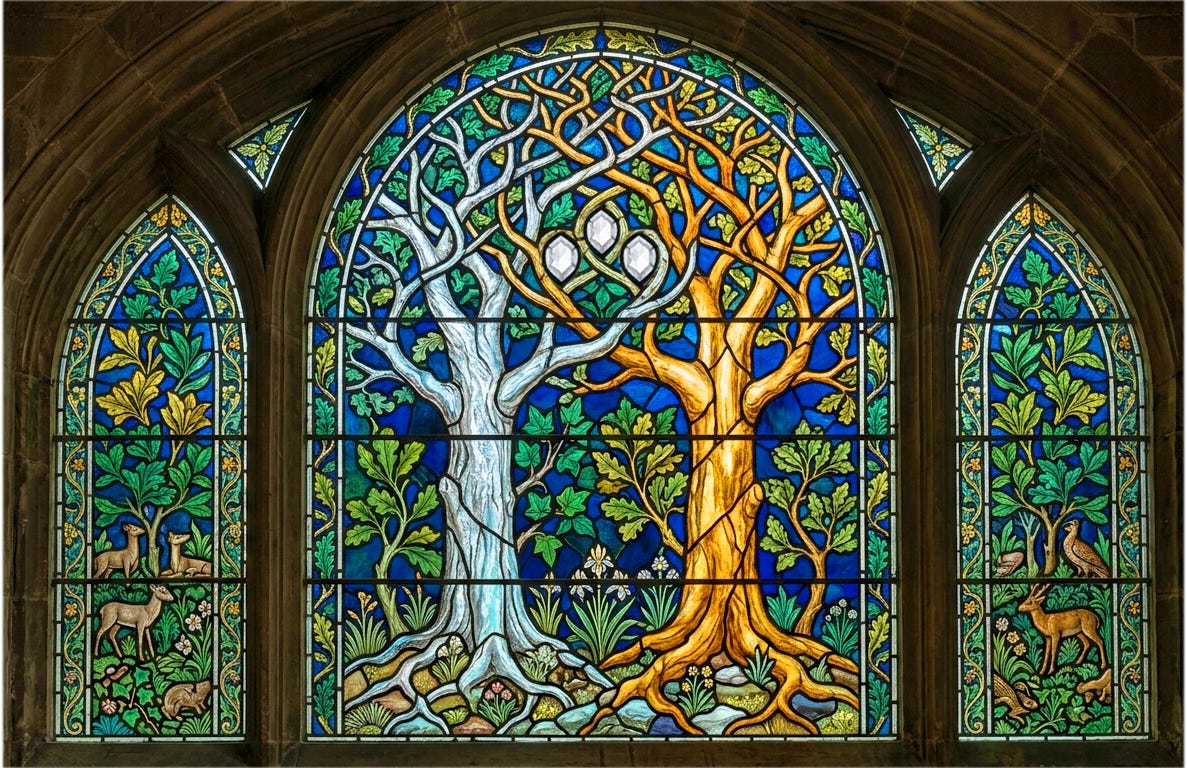
From Lord of the Rings to Lord of the Spreadsheet – How Magic Lost Its Wonder.
Written and read by Vincent Shaw
Earlier this year, for World Book Day, I stood in front of two hundred and twenty children and five teachers and asked them a simple question.
What is magic, and where does it come from?
As the presentation was for eleven-year-olds, I kept things simple by keeping the central premise around the idea that magic could be thought of as a catch-all word to explain things and events that defy rational explanation, and how, over the centuries, magic evolved into the sciences. Alchemy became chemistry, astrology became astronomy, and so on. (You can read that article here.)
In reality, magic is of course an extremely broad and nuanced topic and beyond the scope of this essay. Broadly speaking, magic was a human and deeply personal invention. It was analogical and rooted in the conviction that the world was alive with hidden sympathies and correspondences. Two things that look alike are alike. Two things that had once been in contact were always in contact. If you wanted to heal someone, you found a plant that resembled the afflicted organ. If you wanted to harm someone, you made an image of them and stuck pins in it. Magic was never rational, but it was logical, according to the human condition and world thinking at the time, and that thinking and definition of magic has evolved over time.
In a nutshell, magic was a method to address a human need when other rational mechanisms were unavailable or simply didn’t work. Heal me, protect me, find me love. Tell me who stole my pig. Make it rain. The list is endless. Essentially, magic was seen as a force that could be called upon when something was out of, or beyond, human control. As magic evolved into science, and science enabled greater control, magic simply became redundant.
I would argue that the decline in a belief of magic, ran parallel to a decline in faith. But now, as the world becomes increasingly dangerous and events move beyond the control of ordinary people, so once again we are seeing belief in magic increase, and faith strengthen. But that is an essay for another day.
But as far as practical magic, for want of a better phrase, evolved, it became the sciences, but a belief in magic did not disappear entirely. Magic found its way into fairy stories.
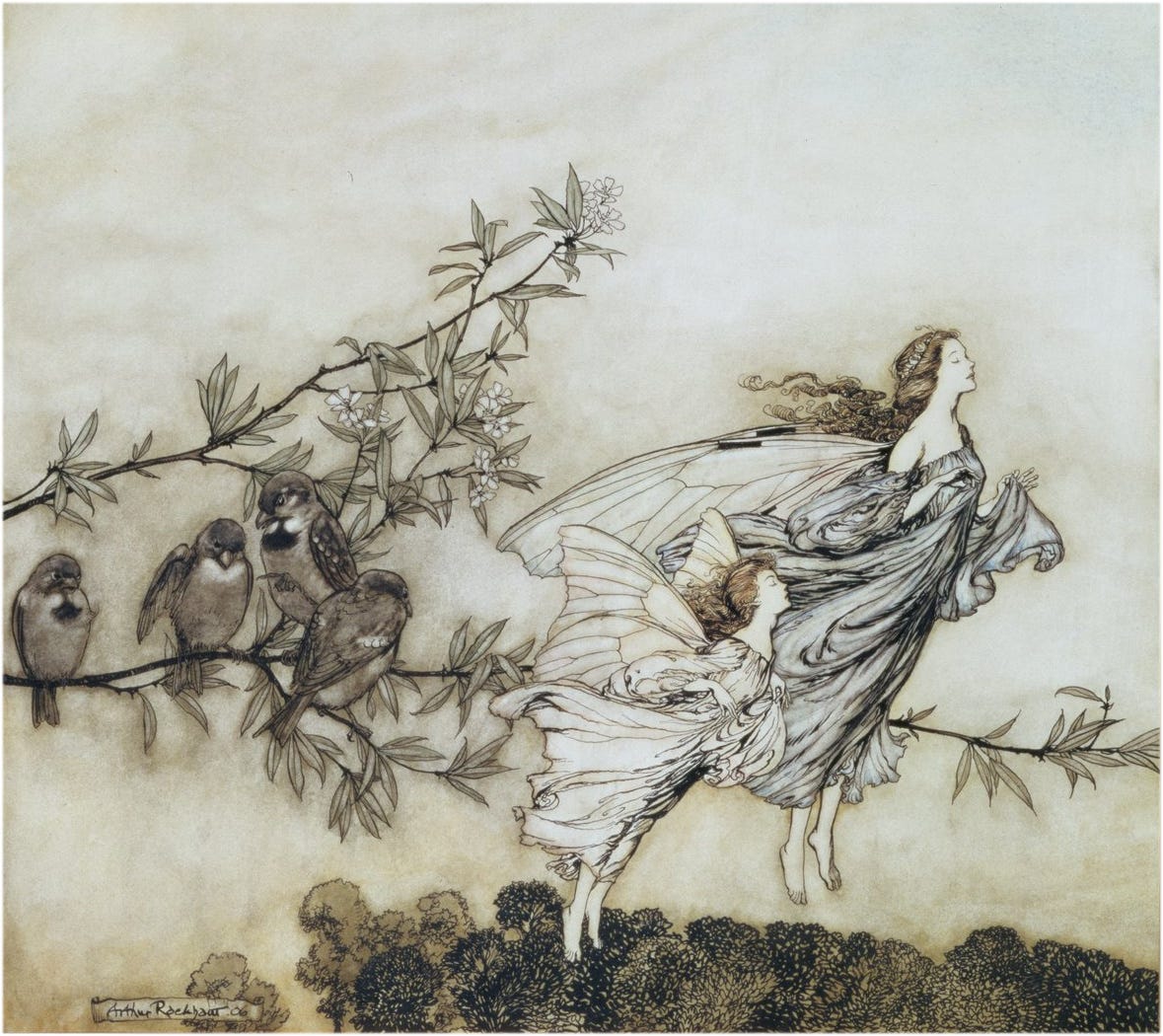
Fairy tale magic is wild. It is arbitrary and unexplained, and is ruled by an internal logic that never announces itself. Beans for a cow. A kiss breaks a curse. Spin straw into gold or die. You don’t know why these things work, they just do. The story doesn’t explain because it doesn’t need to.
But fairy tale magic, for all its wildness, is not amoral. It is deeply and consistently moral – it just refuses to announce its rules in advance. In Perrault’s ‘The Fairies,’ a kind girl gives water to a disguised fairy and finds jewels falling from her lips whenever she speaks. Her rude sister refuses, and is cursed with toads and snakes. In Grimm’s Cinderella, the stepsisters’ vanity is rewarded by doves pecking out their eyes. The discovery of his true name, breaks Rumpelstiltskin’s power, because in the folk tradition, to name something is to hold authority over it.
In fairy tale magic, the virtuous character is rewarded and the wicked, punished. The magic rewards generosity and punishes transgression, but it does so on its own terms. You cannot predict it, game it, or learn it in order to exploit it.
What fairy tale magic is not, however, is sacred. Fundamentally it is pagan in nature. Fairy tale magic is above and beyond not only the character’s, but the reader’s comprehension. It answers to a justice they cannot understand. It has has no named source and no cosmology or omnipotent creator behind it. The morality is real but it is tethered to the individual story, and only applicable within it.
This matters because of who came next – Tolkien.
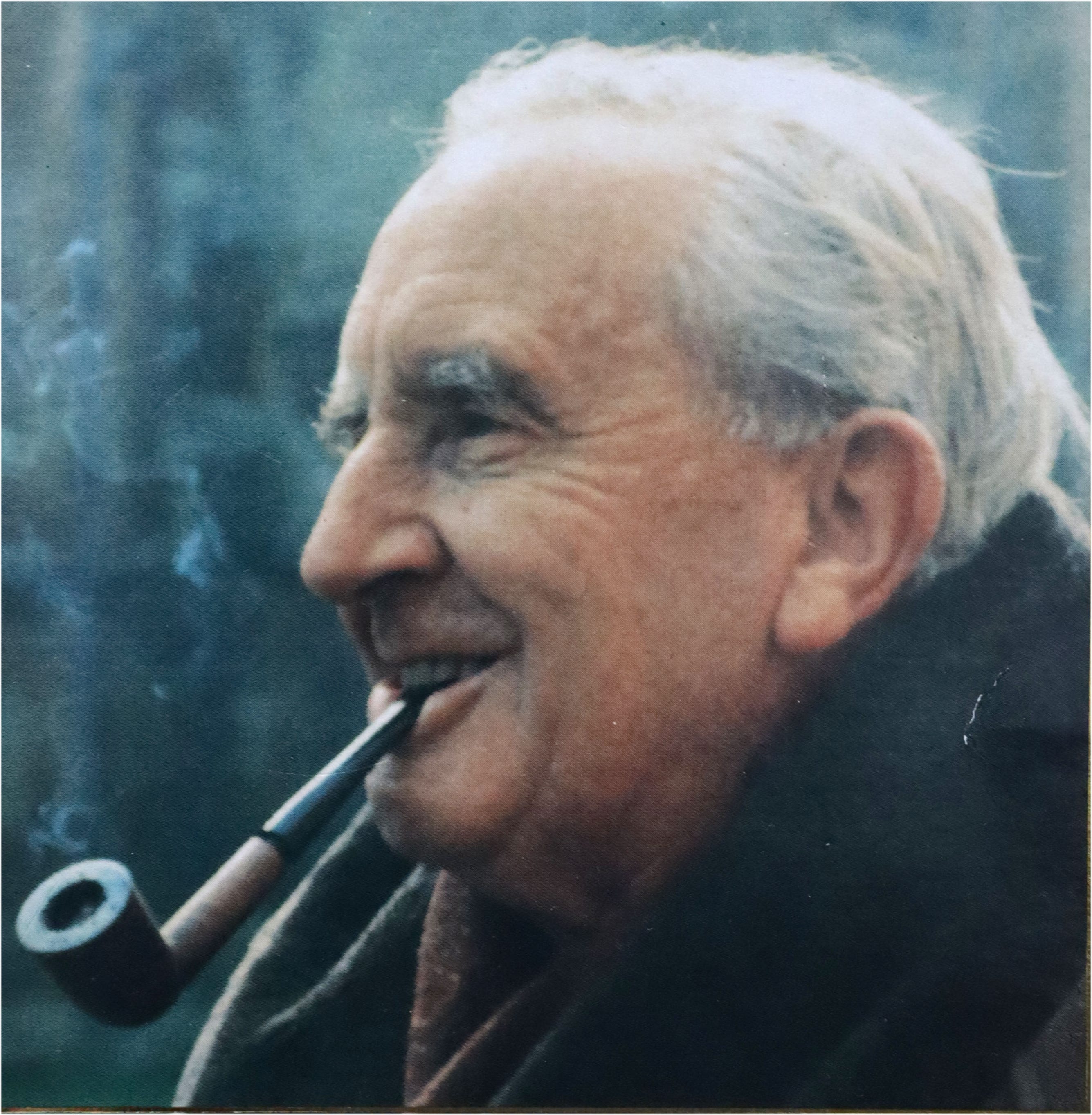
Others had been there before him of course, George MacDonald was one. He was a Scottish minister whose fairy tales carried the weight of faith, was acknowledged by Tolkien as a forerunner. But MacDonald’s magic was sacred within the frame of a parable. Tolkien did something else entirely. He created a world whose moral architecture made every act of magic legible. It was either good and sacred or evil and corrupted. Faithful or fallen. In Middle-earth, magic was a reflection of the world’s making or the rebellion against it.
Fundamentally, Tolkien made magic sacred.
In Middle-earth, magic is not a system to be learned. It is not a skill to be practised, or a resource to be spent and replenished. It is a quality of being, something closer to grace than to individual power, and it cannot be separated from the moral and spiritual architecture of the world in which it operates.
Gandalf can and does use spells. He produces light from his staff, breaks the Bridge of Khazad-dûm with a word of command. But Tolkien never explains his power. There is no spell list, no progression, no sense that Gandalf’s abilities follow rules the reader could learn. You never know what he can or cannot do. The mystery is preserved, even when the magic is on full display. He was sent, not trained. And when he falls in Moria, he is not rescued by his own cleverness or by another character’s intervention. He dies as a direct result of battling evil. He is then resurrected and sent back. The parallel is obvious.
And the word ‘sent’ carries the entire weight of what underpins magic in Middle-earth. Power in Middle-earth is not seized. It is received. The moment you try to seize it, you have already begun the fall.
That is why the Ring cannot be wielded for good. Not because of some arbitrary rule that Tolkien imposed for dramatic convenience, but because the logic of the world makes it impossible. The Ring is domination made physical. To use it, even with the best of intentions, is to accept domination as a method, and in Tolkien’s world, the method is the meaning. There is no version of events in which Gandalf or Galadriel takes the Ring and uses its power for noble ends, because the act of using that kind of power is in itself the corruption. In Middle-earth, magic is not a system. It is the foundation of the world.
The Elves understand magic instinctively. In Lothlórien, when Sam asks about ‘Elf magic,’ the response is one of genuine confusion. The Elves do not distinguish between magic and craft, between enchantment and making, between the numinous quality of a thing and the skill with which it was made. To them, it is all one. A rope woven by Elvish hands has properties that Sam would call magical, but the Elves would simply call it, good rope. This is not vagueness on Tolkien’s part. It is precision. He is telling us that in a world where making is sacred, there is no boundary between the made, and the enchanted – magic.
And the magic of Middle-earth is in everything.
Tom Bombadil teaches the hobbits a spell before they cross the Barrow-downs, although he doesn’t call it a spell, and the reader might not recognise it as such. He gives them a rhyme to chant if they need his help. And when Tom rescues the hobbits from the barrow-wight, his counter-magic is to dig up the treasure and give it away. That is how you defeat a barrow-wight: you break the hoard. To a reader raised on fireballs and lightning bolts, none of this looks like magic at all, but it is. It is magic as the real world practised it for thousands of years, a magic rooted in folk knowledge and sympathetic correspondence, and the conviction that certain acts performed in certain ways, have power.
Aragorn heals with Athelas, a herb whose other name is Kingsfoil, because the king’s hands heal. This is not a fantasy invention. It is a direct inheritance from the real-world tradition of the royal touch, the belief that the anointed monarch carried a divine healing power. Tolkien takes this ancient tradition and places it at the heart of his story. Aragorn cannot heal because he has learned a skill. He can heal because he is the king, and the king’s authority is not political. It is sacred – the divine right of kings. Again, the parallel is obvious.
And then there are the holy names. When Frodo, on the verge of death on Weathertop, instinctively cries out Elbereth Gilthoniel, the name itself repels the Nazgûl. When Sam faces Shelob in the darkness of Cirith Ungol, the same name causes the Phial of Galadriel to blaze with light. Elbereth is Varda, the Queen of the Stars, the greatest of the Valier, the most revered of all the Valar. Frodo and Sam are not casting spells. They are calling out to the divine, and being answered. The name works not because of any magical property inherent in the word, but because of the divine entity it calls.
This is the point at which the underlying faith within The Lord of the Rings becomes impossible to ignore. The magic in Middle-earth behaves the way faith behaves – often as prayer answered.
The Ainulindalë, the creation myth of Middle-earth, is not a spell. It is a song, a great music in which each voice contributes its part to a theme set by Ilúvatar. And the discord of Melkor is woven into the pattern rather than erased from it, because even rebellion serves the greater design. This is the logic of a world that means something, a world underwritten by a greater purpose that the characters can sense even, though they cannot see it.
And the divine, as the source of magic, is what makes Tolkien’s magic feel so very different, in fiction, from all the magic that came after.
Magic in Middle-earth is the power of received grace. That is why it nourishes the reader.
And then we turned magic it into a spreadsheet.
A magic system entertains the mind. It does not feed the soul. That is why we go back to Tolkien and not to the spreadsheet.
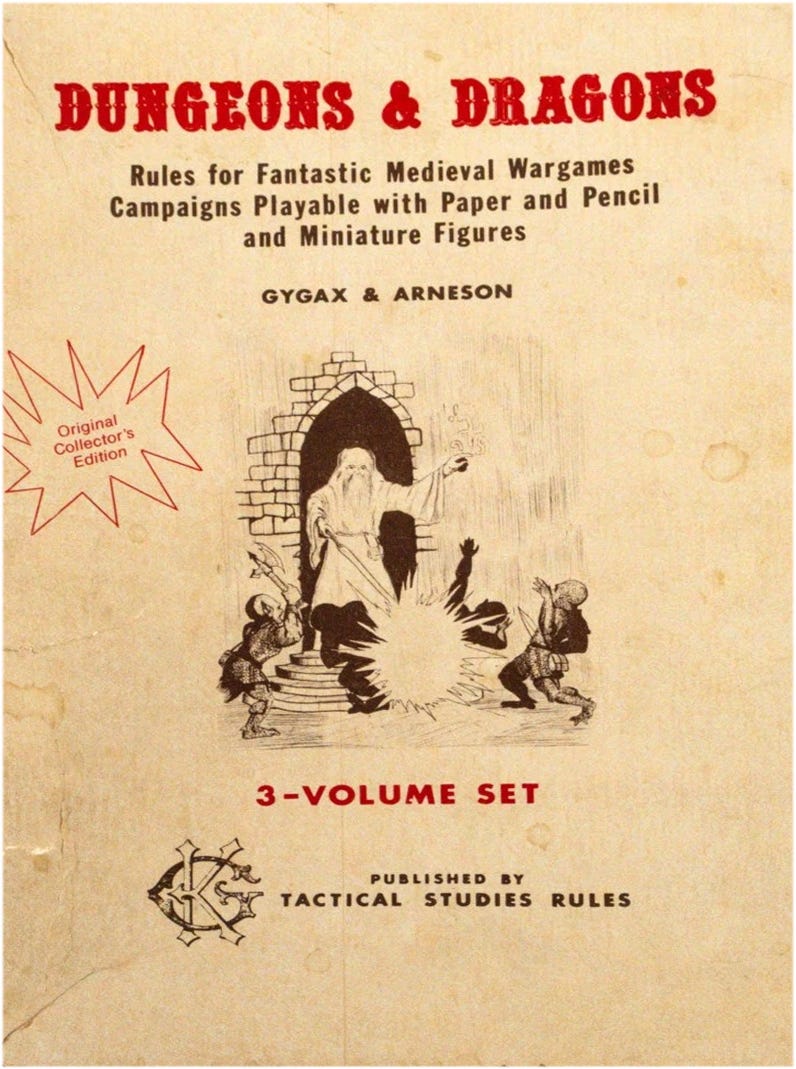
In 1974, Gary Gygax and Dave Arneson published Dungeons & Dragons, and after D&D hit the shelves, magic in fantasy changed forever. The motivation that drove the game’s invention was the love of Middle-earth and The Lord of the Rings – two people trying to find a way of returning to, and having a more complete experience inside, that world.
D&D was a remarkable sideways step into the imaginative landscape. It was a new way for people to inhabit fantasy worlds, and to do so together. But a game requires rules. That is the nature of a game. You cannot have a player announce ‘I cast a spell’, and then spend forty minutes debating whether their character has sufficient moral authority to make it work. (Actually you can. I was that argumentative teenager, but that is a different story.) You cannot have magic in a game, without having some kind of determining mechanism, which for D&D, was the polyhedral dice. The dice, along with spreadsheets, can track levels, ranges, power and duration. And this became magic’s determining mechanism.
So, due to the invention of a game, magic had to become quantifiable. Spells needed categories, levels, ranges, durations. A fireball had to do a specific amount of damage to a specific target at a specific range. Magic became, for the first time in the history of storytelling, a resource to be managed. And within the logic of the game, it works. It has to. The alternative is an unplayable game, and chaos.
But the mechanics of game magic didn’t stay inside the games.
Game magic, and its quantifiable mechanism, bled into fiction, slowly at first and then completely.
Over the following decades, fantasy novels increasingly treated magic as a system. Writers built elaborate frameworks: materials that granted specific powers when ingested, energy sources that could be drawn upon and depleted, magical disciplines with rules as rigid as the laws of physics. The reader’s pleasure shifted. It moved away from the wonder of the divine, toward the satisfaction of watching an elegant mechanism working, and leading to a reward-based outcome.
Entire schools of thought emerged around this idea. Writers taught other writers that a magic system was only satisfying to the degree that the reader understood its constraints, that the resolution of a fantasy novel should depend on the protagonist’s insight into how the magic works. That mystery in magic was a flaw to be engineered out, not a quality to be preserved. And a generation of readers and writers grew up believing that this is simply what magic in fantasy is: a system with rules, a mechanism to be understood. That encroachment of rules-based magic into fiction, has now reached the point where it is a fiction genre in its own right – LitRPG (Literary Role Playing Games), stories where game mechanics and narrative literally coexist on the page.
All these different forms of magic can be found in countless books, and they work very well. A well-constructed magic system can be genuinely thrilling. The pleasure of watching a clever character exploit the laws of a fictional world is real. Many of these books are quality, well-written works, and the people who love them are not wrong to do so. But something was lost, and I would argue that most readers can sense it – that as good as these books are, they do not come close to the experience that The Lord of the Rings delivers.
I think what was lost, was spiritual depth.
A well-crafted magic system entertains. It engages the mind. It provides the pleasure of pattern recognition and the satisfaction of a reward-based outcome. But it does not nourish emotional or spiritual hunger. It does not leave you, at the end of the story, feeling that you have been in the presence of something that touches absolute truth, something greater than simply words on a page.
Tolkien’s magic nourishes spiritual hunger. That is why people return to The Lord of the Rings time and time again. They return so they can re-engage with something that can be deeply felt and does not diminish with rereading. This feeling is best illustrated by Samwise Gamgee in Mordor.
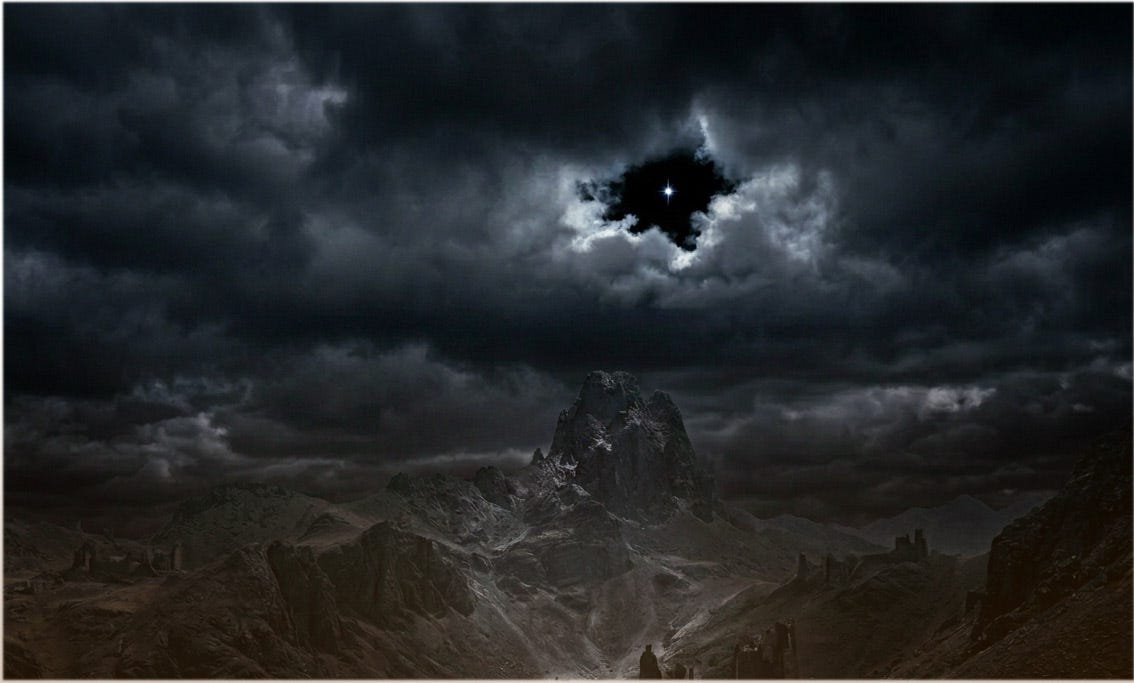
‘There, peeping among the cloud-wrack above a dark tor high up in the mountains, Sam saw a white star twinkle for a while. The beauty of it smote his heart, as he looked up out of the forsaken land, and hope returned to him. For like a shaft, clear and cold, the thought pierced him that in the end the Shadow was only a small and passing thing: there was light and high beauty for ever beyond its reach.’
This passage never fails to move me. Why? Because it touches upon an absolute truth, and I am certain that I am not alone. In my view, that is what is missing from so much contemporary fantasy fiction, and why magic in fantasy is now unsatisfying, no matter how many fireballs you cast.
Sam seeing the Star of Eärendil is moving because it represents the entire architecture of Tolkien’s legendarium: the Silmarils, the Two Trees, the light that existed before the sun and moon, Varda who set the stars in the sky, the whole cosmology of a world made in love and marred by pride and sustained by grace. Sam doesn’t know any of this. He just sees a star. But the reader senses that spiritual foundation, even if they have never read the Silmarillion. The reader feels it because the world Tolkien built is founded on faith, hope, and truth.
A magic system rests on its own internal logic. When the logic is exhausted, when the reader has understood all the rules, the wonder is spent and the spreadsheet is complete.
Tolkien’s magic flows from the divine. That is why the passage where Sam sees the Star of Eärendil is so moving, even on its twentieth reading.
I stood in front of two hundred and twenty children and asked them where magic comes from. The answer I gave them that day was the one that fits on a classroom whiteboard: magic became science. Chemistry was once alchemy. We learned to explain the world and the magic receded.
But the question I have been turning over ever since, is a different one. Not where does magic come from in the world, but where does it come from in the stories we tell, and why does it land so deeply in some stories and not in others?
I think the answer is that the most satisfying magic in fiction was never really about magic at all. It was about what sits behind it. One upon a time, fairy tales gave us magic that was strange and beautiful, and it thrilled us, but Tolkien moved beyond this.
Tolkien gave us magic that was an founded on truth, and that is impossible to improve upon.
Hi ScaryLion. Thank you so much for restacking. Best wishes Vincent
Hi Ilia. Thank you very much for restacking and I’m glad you enjoyed the article. Best wishes Vincent