

Middle-earth: A World of Craftsmanship and Faith

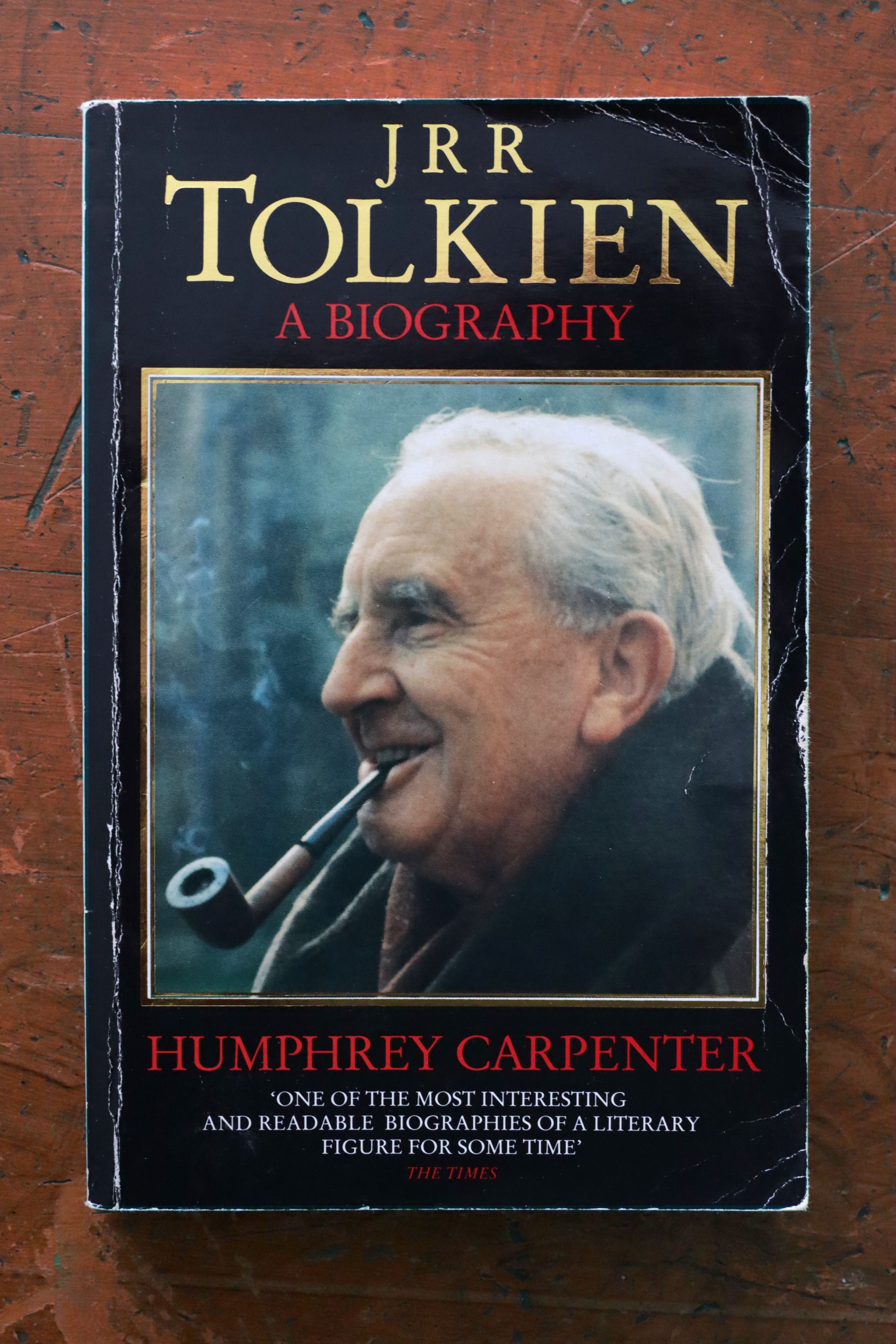
I first read The Lord of the Rings when I was at art college and played my first D&D game. I have also listened to the Rob Inglis audiobook many times and either read or listen to it every couple of years or so. But it was only recently that I noticed how nearly everybody in Middle-earth is making something.
Not just the obvious things, the Rings of Power, the great swords with their ancient names. I mean everybody. Hobbits are gardeners, bakers, brewers, weavers, and woodworkers. Elves are jewellers, smiths, weavers, and poets. Dwarves are miners and masons and the finest metalworkers in the world. Even the Ents, those slow, ancient tree-shepherds, are makers of a kind, tending, shaping, nurturing living things across centuries of patient care.
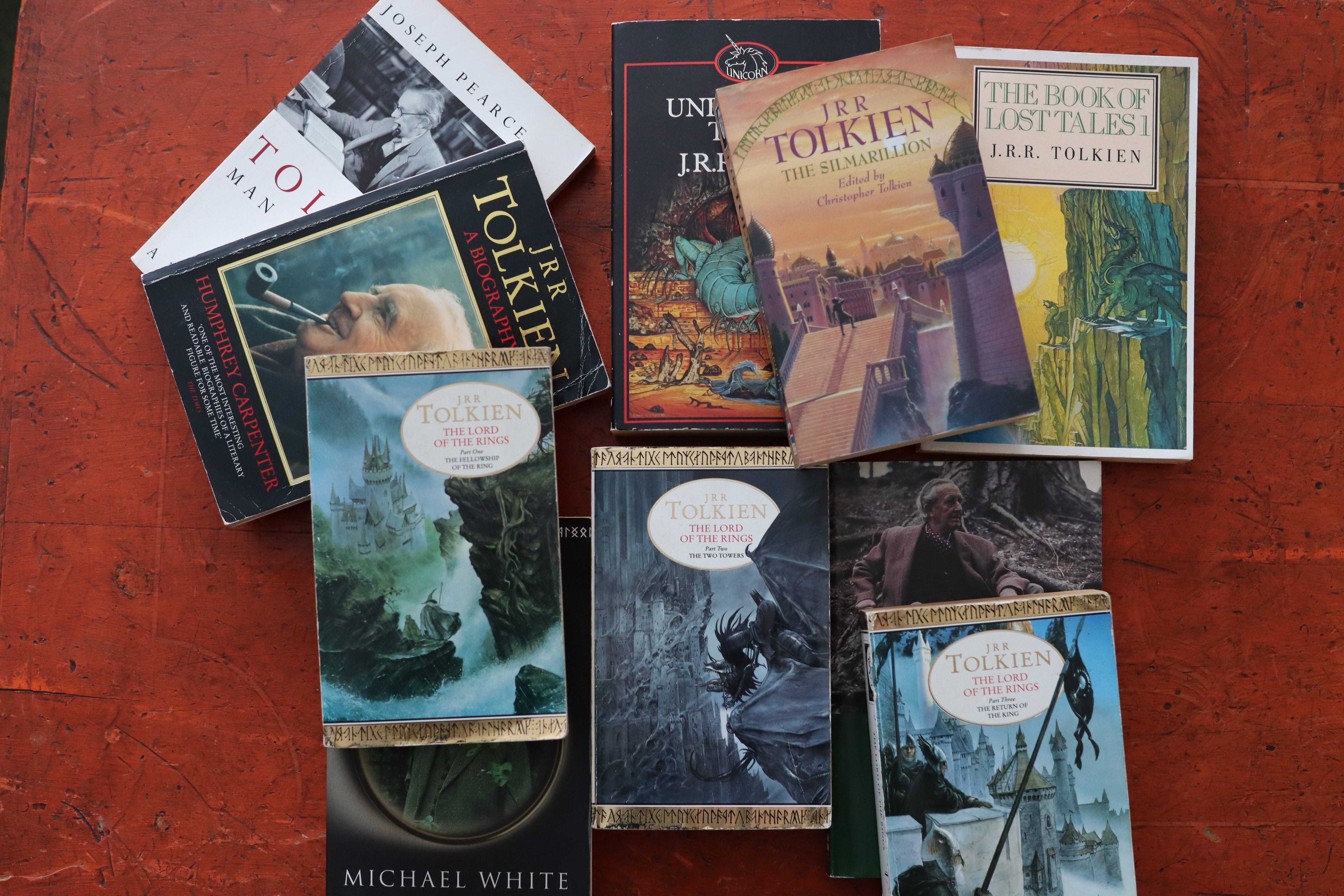
Middle-earth is not a world of heroic warriors. It is a world of craftsmen who have to put down their tools because they have to fight.
Care and craft is front and centre of Tolkien’s creation myth from the very beginning. The Ainulindalë, the Music of the Ainur, is an act of making. The world is not spoken into existence by decree. It is crafted, first as music and then shaped physically by the hands of the Valar, the angelic powers who enter the world they helped compose and begin to build it.
And among the Valar there is Aulë, the Smith, the craftsman. His joy and his curse is that he cannot stop creating. He loves materials and form so much that, unable to wait for the arrival of Elves and Men, the children of Ilúvatar, he goes ahead and makes the Dwarves. An entire race, brought into being not out of malice or ambition but because the urge to create something was simply too strong for him to resist.
In a mythology full of grand themes and the struggle of light against darkness, Tolkien places the creative impulse at the very root of existence. Making things is not something that happens in his world. It is what his world is.
Follow the thread forward into the great stories of the First Age and you find the Silmarils, the three jewels of unsurpassed beauty, made by the Elf-smith Fëanor, capturing the light of the Two Trees of Valinor. The entire tragedy of The Silmarillion unfolds because of what one craftsman made. Wars are fought, oaths are sworn, civilisations fall, all over three handmade objects and the question of who has the right to possess them.
The Rings of Power are forged. Not conjured magically into existence, forged. They are made by hand. The language Tolkien uses is always the language of the workshop: hammering, tempering, making. Sauron seduces the Elven-smiths of Eregion not with promises of conquest but by appealing to their love of craft. He comes to them as Annatar, the Lord of Gifts, and offers to teach them to make more beautiful things. He corrupts them through the very quality that makes them noble.
I believe anyone who has been given the desire to create has been gifted something sacred, but that gift is also vulnerable. It can be turned and corrupted, which happens all too often in the real world. Nuclear generated energy on the one hand, weapons of mass destruction on the other.
However, for me, it is in the quieter corners of Middle-earth that the craftsmanship becomes most appealing.
Bilbo’s home, Bag End, is described with the loving precision of someone who cares about how things are made. The round green door with its brass knob in the exact middle. The panelled walls, the tiled floors, the polished chairs. For Hobbits, and for many of us in the real world, family, home and handicraft are all one and the same thing.
The hobbits knit, sew, and cook. They brew beer. They tend gardens with a devotion that borders on faith, and in Sam Gamgee’s case it really does become a matter of faith. Faith and belief that his gift from Galadriel in Lothlórien, the box of earth and a single mallorn seed, will heal the Shire. And and after all the hurts of Saruman it does exactly that.
For me, the best example of craft and faith in Lord of the Rings is the Elvish rope given to Sam in Lothlórien and that he uses on the journey to Mordor. Craft, because it is hand woven by Galadriel and her maids. Faith because it responds to the those in need. When it is used, it holds. When its work is done, it releases. It is a thing made with care and craft, and it has something close to a soul. Sam, the gardener and practical craftsman, is the one who understands it best. When they reach the bottom of the cliff and the rope is still tied at the top, Sam tugs it and it unties itself, falling into his hands. “Have it your own way, Mr. Frodo,” he says, “but I think the rope came off itself, when I called.” - an act of faith.
Sam is not the only one who sees the world through a maker’s eyes. Gimli in the Glittering Caves of Helm’s Deep is one of the most beautiful moments in the entire book, and it is entirely about craft. He does not see treasure. He does not see wealth to be hoarded. He sees potential, raw stone waiting to be shaped, caverns that could be carved and lit and made into something that does justice to their natural beauty. He would work the stone, he tells Legolas, with such care that the caves themselves would not object. That is a craftsman talking.
And his request to Galadriel for a gift, three hairs from her golden head is that of a craftsman.
“It is said that the skill of the Dwarves is in their hands rather than in their tongues,’ she said; ‘yet that is not true of Gimli. For none have ever made to me a request so bold and yet so courteous. And how shall I refuse, since I commanded him to speak? But tell me, what would you do with such a gift?’
‘Treasure it, Lady,’ he answered, ‘in memory of your words to me at our first meeting. And if ever I return to the smithies of my home, it shall be set in imperishable crystal to be an heirloom of my house, and a pledge of good will between the Mountain and the Wood until the end of days.”
Then there is lembas. Elven waybread. The bread sustains not just the body but the spirit. Tolkien is very clear about this. Lembas is not merely efficient nutrition. It is food made with such care and intention that eating it is restorative in a way that goes beyond the physical. It feeds the will. In many ways it could be interpretted as a kind of eucharist. It is the opposite of the Orcs’ maggoty bread, which sustains the body and degrades everything else.
Consider, too, the swords. Sting, Glamdring, Orcrist, ancient blades made by Elvish smiths in Gondolin, a city that fell thousands of years before Bilbo found them in a troll’s cave. They still glow when enemies are near. They still cut when lesser blades would fail. The craft endures long after the craftsman is gone. Tolkien returns to this idea again and again: craftsmanship outlasts the craftsman.
And the reforging of Narsil into Andúril, the sword that was broken, remade for a new age, is not incidental to the plot. It is the moment Aragorn’s kingship becomes real. Not when he sits on a throne. When a sword is reforged. The making of the thing is the making of the king.
What strikes me most is that Tolkien draws a clear moral line between good making and bad making. The Elves craft slowly, with love, over centuries. Sauron forges in secret, in haste, with domination as his purpose. Saruman tears down the trees around Isengard and burns them in his pits and furnaces. His is the work of industrialisation, of making without care - the corruption of ingenuity and craftsmanship.
And when Saruman comes to the Shire, that final, devastating chapter that so many readers find uncomfortable, what does he do? He replaces the handmade with the mass-produced. He knocks down the old buildings and puts up ugly new ones. He pollutes the water. He turns the mill into a factory. He does not invade the Shire with an army, Saruman destroys the Shire with industy By the replacement of things made with care by things made by machine. For Tolkien, that is the deepest violation of all.
I do not think this is suprising, Tolkien was a careful maker himself. A philologist who built languages by hand and then built a world to house them, who illustrated his own books, who drew maps not as afterthoughts but as working tools, who revised his manuscripts with the obsessive patience of a man who understood that good work, that craftsmanship, takes time.
Tolkien was, in every meaningful sense, a craftsman, whose tools happened to be pen and paper. Beneath the mythology, he made a world in which care, craft and faith is the purest expression of what it means to be human.