


For a short time, when I was about ten years old, my father spent a few months as a milkman, and I can remember the distinct drone of the electric milk float, followed by the very familiar chink of milk bottles arriving on the doorstep. Me and my brother would squabble over who got the top of the milk, as cream on breakfast porridge was ‘the’ best, especially gold top, delicious. I also remember the miniature third of a pint glass bottles of milk at infants’ school. We would each get one at morning break, and we would all suffer the infamous brain freeze headache in the rush to drink it and get outside and play for twenty minutes.

In Britain the electric milk float, and the round, the delivery route a particular milkman was responsible for, was still very much alive, and in the 1980s, in the city of Liverpool, one milk round took in the Royal School for the Blind. That round was the responsibility of Brian Jacques, the author of the Redwall series of books.
Over time, Brian got to know the children at the Royal School, and volunteered to read to them. Very quickly he grew unimpressed with the quality of the children’s books he was reading. He thought it was dreadful stuff. Many years later he would tell the New York Times that it was too concerned with teenage angst and divorce, and that the magic in the books of his own childhood was long gone, which is something I think many of us would agree with.
The blind and visually impaired children he was reading to had enough difficulty already, let alone having to sit through someone else’s troubles dressed up as children’s literature. ‘What’s wrong with a little bit of magic in their lives?’ he said. Brian was as good as his word, and set about creating a world for those children.
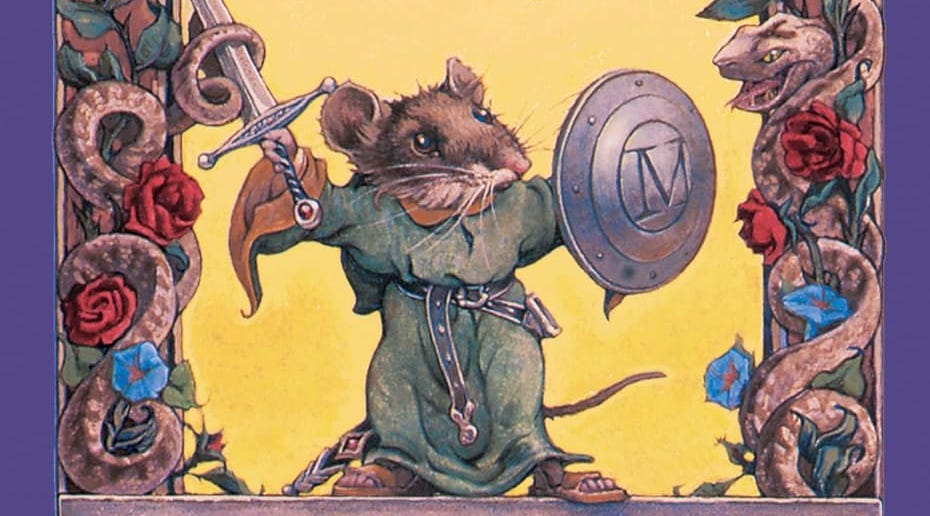
Brian wrote in the evenings. It took him seven months, working by hand on recycled paper, and he could only write on the blank side, so when he finished his first draft there were eight hundred sheets, which he kept in a supermarket carrier bag. In that old bag was an abbey in a wood, and a young mouse who was not brave and became brave. The book is, of course, Redwall.
Alan Durband, the man who had taught Brian English at school, read the manuscript and sent it to a publisher without telling Brian. Redwall was published in 1986. There were twenty-two books in the end, selling something over twenty million copies, and producing a generation of children who are now in their thirties and forties and who will still, if you say the word Redwall to them, start telling you all about the food in the books, because it is the food that everyone remembers. Not the swords, the battles and all the other animals armed to the teeth, the food.
And the feasts in the Redwall books run for pages. Deeper’n’ever turnip’n’tater’n’beetroot pie. October ale. Damson pudding, hazelnut cake, cordials with the fizz named and the temperature given. Cheese with the rind described. The food in his books became so famous that a Redwall cookbook was written, and grown adults have attempted to create some of the dishes with mixed results. The food in the books has generally been treated as a charming eccentricity of the series, and nothing more.
But in my view it is nothing of the kind. Brian was writing for children who could not see. Those long descriptive passages of food are the foundation on which all else rests, at least for those visually impaired children. Every sensory detail in his books is load-bearing. He was building a world for an audience who could only ever receive it as the spoken word, and he was making up for the loss of vision by quite literally giving them a feast for their ears.
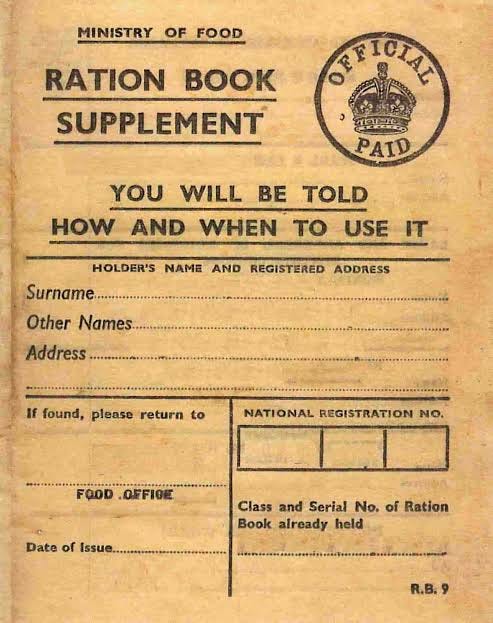
There is something else in it too. Brian Jacques was born in 1939. My father was born in 1933, six years before Brian, and both grew up with the shortages and rationing of WW2. My father has very strong memories of his first banana after the war, and he has always loved his food, and I am sure those formative years, the rationing and no sweets, shaped both my father and Brian’s love of a good meal.
So Brian loved his food, and what the children at the Royal School gave him was the reason to put it down on paper, and the obligation to do it properly.
And what I keep coming back to is this. Every child reads the way those children had to listen. A picture on the page or the words in the ear, describes the thing, but the thing has to be built, and the building happens in the mind of the child who has never seen an abbey, or a mouse with a sword, or a tankard of October ale. The child reading in the armchair, or the blind child listening at the Royal School, are doing exactly the same thing. The only difference is that one of them could have been handed a picture instead, and the other could not. Brian was specifically writing for the children who could not, which is why he wrote the stories for those blind children with every sense he had left to work with.
Brian knew who he was writing for. Visually impared children, most of whom he knew personally, and who knew him.
And I think you can feel that in the prose. Writing aimed at everybody fails to satisfy anybody. It is the difference between a meal your mother cooked for you and a pizza out of a supermarket. Both will feed you, but only one of them was made with you personally in mind.
In his books Brian created an abbey. He could have built a castle, the place is besieged often enough to have justified one, but he built an abbey, where the central act is a long table with everybody sitting down to eat, including guests who have only just arrived and have nothing.
Which is, more or less, what he went on doing with the rest of his life.
Brian did not change much after the success of his books. He carried on living in Liverpool, kept a radio programme going in Merseyside for over twenty years, and stayed a patron of the Royal School for the Blind until he died in 2011.
The milk floats are long gone, along with the glass bottles, the foil tops, the cream and the chink of them on the doorstep. The milkman has been replaced by a plastic carton in a supermarket.
But if you were one of those children reading the Redwall books under the covers late at night, hungry for an abbey pie that has never existed and never would, you were reading the work of an author who had created a world for children who would only ever hear stories. An author who knew his audience, and who knew that magic and wonder still belonged in children’s books.
My 13 year old discovered Redwall last year! I can't wait to share this with him. We had a local dairy that delivered milk in glass gallon jugs when I was a very little girl. I still remember our milk man, and what a kind soul he was.
I never knew the story behind Redwall! I remember trying to read it years ago, but I was so used to modern writing styles that it was hard for me to digest. Now that I’ve read more classics (and found I prefer them) I want to pick up Redwall again and look for all the wonderful descriptions he wrote for the blind children. Thank you for sharing this!
(Reading this article has also made me wish milkmen were still a thing, because that sounds delightful!)