

The Smell of Reading is Pink Paraffin

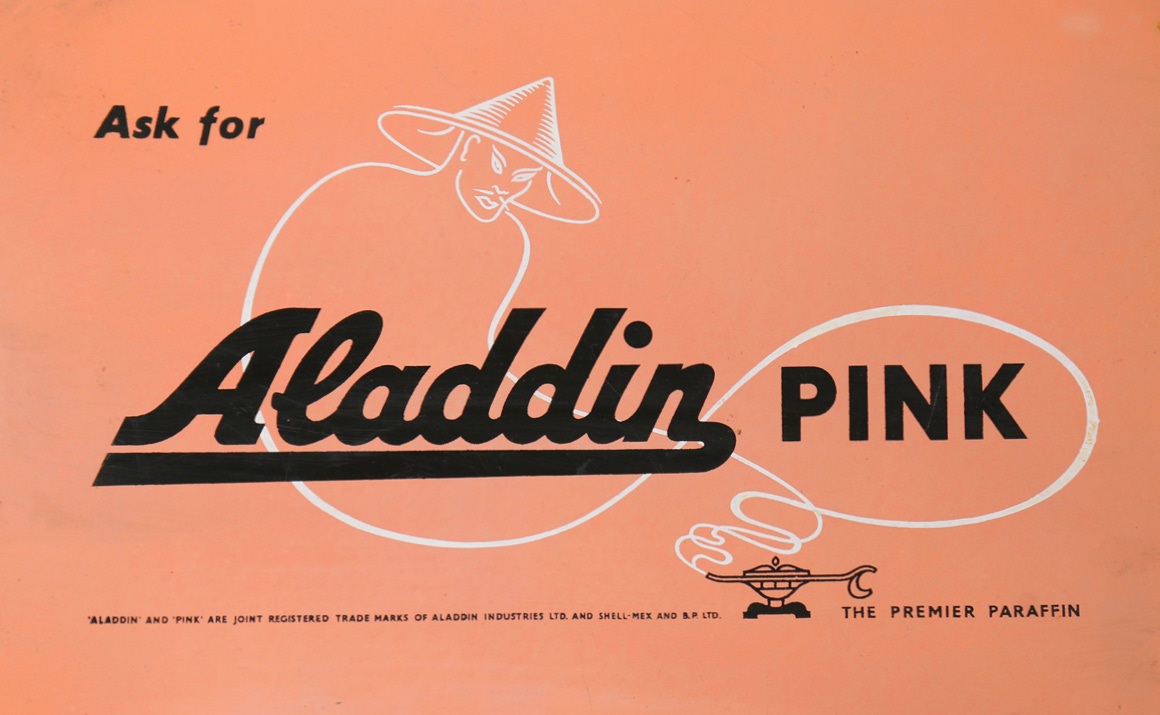
The smell of reading is pink paraffin.
My father collected antique Victorian oil lamps. Not a huge number, five or six, and for most of my early childhood they sat unlit on shelves and windowsills, doing nothing in particular but gather dust.
One lamp I remember well. It had a big heavy base, a tall brass decorative column, on top of which was the oil reservoir or font - glass and etched with flowers. Crowning this was the rest of the lamp and the glass chimney. I remember it well because in the UK, during the 1970s, there were winter power cuts, and I learned to read by the light of that lamp.
About ten minutes before the power was due to go off, my father would carefully check and trim all the wicks and fill the fonts with paraffin - pink paraffin, the colour of rosé wine, and I remember it colouring the etched glass flowers of the font. But what I remember most was the smell, and even though I haven’t smelled pink paraffin for over forty years, I would recognise it again in a moment. It was an odd, chemical but at the same time sweet smell, like a cross between petrol and barley sugar, and when the lamps were lit that smell filled the whole room, not overpowering, but there as an ever present, distinctive and quite comforting smell.
The smell changed when the lights came back on and the lamps went cold. The top of the glass chimney had a fine coating of dense black soot on the inside, and the soot had its own acrid scent that was nothing like the warm sweetness of the burning oil. Even now, more than fifty years later, I could tell you the difference between those two smells with my eyes closed.
It turns out there is a reason why these kinds of memories stay with us. Of all our senses, smell is the only one with a direct line to the parts of the brain that handle memory and emotion. Everything else - what we see, what we hear, touch, and taste - gets processed and filtered before it reaches the brain. Smell bypasses that filtering and arrives unedited, and carrying the raw memory with it. Scientists call this the Proust effect, after the famous passage in which the smell of a madeleine dipped in tea sends the narrator tumbling back through decades of memory. Proust got it exactly right, even if he did take several thousand words to describe what most of us experience in the space of a heartbeat.
The smell arrives first. The memory follows. And the emotion that comes with it is complete and unfaded, as though no time has passed at all.
I think that childhood memory is often built on smells that no longer exist.
Before my dad’s paraffin lamps, I remember coal being delivered by a horse and cart. The coalman heaving sacks down from the cart and pouring them through a small hole in the pavement and into the coal bunker below. The noise of it, that rush and clatter, the dust, but mostly the smell. Coal has a smell like nothing else - dense, mineral, sulphurous and ancient. I got into trouble more than once for playing in the coal bunker. It was the smell that drew me in there, not the dirt.
When I was old enough, I was allowed to light the fire. First on the cold grate, newspaper, loosely bundled and newspaper has a smell not unlike pink paraffin. On top of paper, you place dry kindling, and then on top of this, coal.
I loved lighting the fire. It wasn’t that I had a fascination with flame. It was more that it was such a transformative act, and there was an art, a craft to making up the fire. If you didn’t get it just right then the newspaper would go up in flames too fast, going out without catching the kindling. Then you would have to take the fire apart and start again.
And there were stages of smell. The burning newspaper. The resinous bubble of the kindling. And then the coal itself, slow at first, reluctant, before it finally took, smoky and sulphurous. After an hour, when the coal had settled onto its glowing orange ember bed, the whole room filled with that deep, earthy warmth that central heating has never come close to replicating. I remember our chimney sweep too, how the smell of soot was so deeply ingrained in him that it preceded him into a room like an announcement.
These are not nostalgic observations from a man who wishes it was still 1973. Central heating is far better than a coal fire in almost every practical respect, and I do not miss carrying a bucket of ash out to the garden on freezing mornings. But in not having the coal fire, we don’t have the smell of something real happening in the middle of the house.
Everything has a smell and primary school is another distinctive one for me. The particular tang of powder paint mixed too thick in a plastic pot. Coal tar soap in the toilets, that sharp medicinal scent that I can still summon instantly. And whilst not a smell, it is a distinct memory: drinking ice cold milk from a small glass bottle, so cold it gave you brain freeze and smelled of nothing but cold itself.
Every one of those smells is an anchor. Pull on any one of them and a whole memory comes with it, complete and immediate, and more real than any photograph.
For me, this matters because we are increasingly living in a world that has no smell at all. A screen has no scent. A digital photograph carries no trace of the darkroom. An email does not arrive with the faint whiff of the sender’s desk. We are conducting more and more of our lives through a medium that is, from a sensory perspective, completely sterile. Clean, efficient, frictionless, and empty.
I am not saying this to wag a finger at anyone’s screen time. I am typing this on a computer, after all. But I do think it is worth noticing that it is what we lose when our lives become too digital. Not just the pleasure of physical creation, but the smell that goes with it. And without the smell, we lose the anchor that memories often latch onto.
When we are doing something creative - when we bake, paint, carve, read or write - the smell of what we are doing makes a connection so direct it can quite literally transport us back through time.
Just *reading* about the smells brought back memories! Our house was heated - in two rooms at least - with coal and with 'Esso Blue' paraffin. (Kids today are shocked when I tell them the other rooms in the house had frost in the *inside* of the windows in winter.) Paraffin was also one of the smells of primary school, as our classroom featured a large paraffin heater, protected by a wire cage, in the corner. As for coal tar - I loved the soap's smell but the biggest 'hit' of coal tar was when we had coughs and colds, when the 'Wright's Coal Tar Vaporizer' was placed on top of the wardrobe in our bedroom, filled with coal tar liquid that would be gently evaporated by a lit tea-light candle beneath. We probably inhaled the equivalent of about 60 Woodbines a night!
A really evocative post. I can almost smell the coal!