


If you have read any of my previous essays, you will know that Tolkien sits at the heart of almost everything I believe about stories, craft, and imagination. I have written about Tolkien’s world as a world of craftsmen, about his magic as received grace rather than learned technique, about the Shire as an act of preservation. I love Tolkien’s work, and I have read The Lord of the Rings many times.
But there is another writer I love more. And the story of how I fell in love with his work begins not with a book, but with a film and a single word.
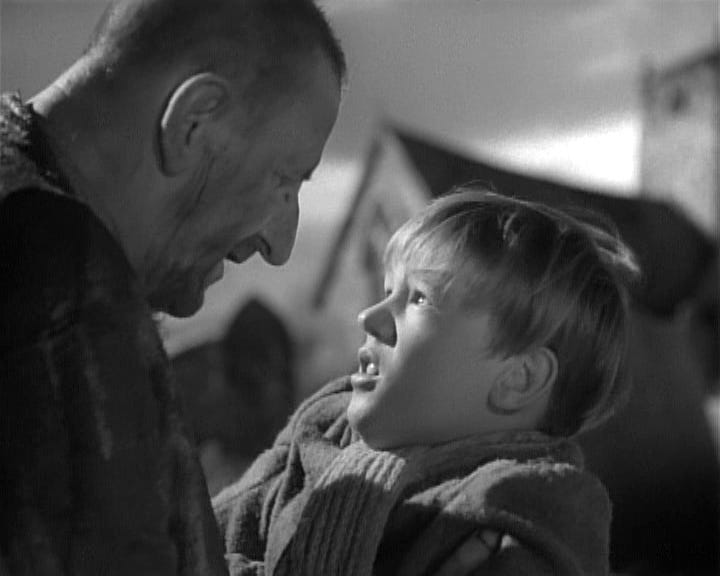
I cannot tell you exactly how old I was, or even where I was, when I first saw David Lean’s 1946 Great Expectations, other than I saw it on the television. What I can tell you is the memory of that opening scene, and of hearing that word, wittles.
‘Now lookee here,’ he said, ‘the question being whether you’re to be let to live. You know what a file is?’
‘Yes, sir.’
‘And you know what wittles is?’
‘Yes, sir.’
After each question he tilted me over a little more, so as to give me a greater sense of helplessness and danger.
‘You get me a file.’ He tilted me again. ‘And you get me wittles.’ He tilted me again. ‘You bring ‘em both to me.’ He tilted me again. ‘Or I’ll have your heart and liver out.’ He tilted me again.
That opening scene has stayed with me all my life, and in my view it is one of the most atmospheric pieces of cinema Britain has ever produced. The bleak Kent marshes under a grey sky, the gravestones, the biting cold wind. And a boy, alone, very alone, at his parents’ grave and beginning to cry.
And then, out of nowhere, a great monster of a man with a coarse voice and terrifying face. The face of a man who has crawled out of a desperate, terrible world the boy cannot imagine.
I am fairly sure it was my very young fascination with that film that prompted my mother to give me a children’s version of David Copperfield, my very first grown-up novel. I was nine years old. She managed the book department at WH Smith, and she knew what a book could do. Copperfield was the door into Dickens, and once I was in his world, I never came out.
But as much as I love David Copperfield, it was not Copperfield that made me fall in love with the works of Charles Dickens, or indeed with the English language itself. It was David Lean’s film, and that single word, wittles.
That 1946 film did two things to me, and I did not understand until much later that they were connected.
The characters in David Lean’s film are extraordinary to look at. The film is shot in black and white, and in my view they are closer to the original Cruikshank illustrations than any colour adaptation could be, and deliberately so, I am sure. Those faces, those rooms, those bodies shaped by their natures; they pulled me in the direction of art. Of painting. Of portraiture. Of wanting to capture character on a surface.
And the story itself, the arc of Pip’s false expectations, his slow recognition, the magnificent generosity of Magwitch, the quiet goodness of Joe Gargery, pulled me in the direction of writing. Of wanting to do with words what Dickens had done: build a world from character upward.
I did not know it then, but that single film was the spark for both of the things I have spent my life doing, painting and storytelling. Both rivers flow from the same source. And the source is a terrifying convict on the Kent marshes saying wittles.
I have read Great Expectations and watched many versions of the film more times than any other story. More than The Lord of the Rings. More than the Gormenghast trilogy. Those novels have given me some of my most deeply felt essays for this publication, and neither of them is the book I return to most.
And here is what I have come to understand about returning to Great Expectations. On the first reading, it is an act of discovery of the plot. Who is Pip’s secret benefactor? What happened to Miss Havisham? Will Estella ever love him? On the first reading, you turn pages because you want to know what will happen next.
On the fifteenth reading, you know the story intimately. The plot is settled, the surprises are spent. And what remains, what you find underneath once the scaffolding of suspense has been taken away, is Dickens’s moral architecture through his characters. The whole of a man revealed in a single mispronounced word.
If you have not read the novel – spoilers ahead.
Wittles. Not the correct word, victuals. Wittles. A word that tells you everything about the man who says it. The sound is blunt and graceless, a word from a man who has never been given anything and has had to take everything by force. A convict, a brute, desperate and hungry.
And it is the word that begins the most generous relationship in the entire novel, and, I would argue, in any novel. Because the man who said wittles, Abel Magwitch, will spend twenty years rebuilding his life in Australia and pouring every penny he earns into a boy who brought him food on a freezing morning. Pip brought Magwitch what he wanted not out of kindness, but out of terror. But that did not matter, as far as Magwitch was concerned. I would argue that from Magwitch’s perspective, a pork pie from a frightened child was probably the only real act of kindness that had ever been shown to him in his entire life, and it opened his heart to reveal his true noble, and long forgotten, self. That act of kindness from Pip awakened the real Abel Magwitch.
In my view, in not only Great Expectations but in all Dickens’s novels, characters are the story, and the story are the characters.
Magwitch is violent, but he is not vicious. That distinction matters. He is brutal because the world has brutalised him: transported, imprisoned, beaten into the shape of a criminal by a system that never once gave him a chance to be his real self. And all it would have taken is a little kindness.
I would go further and say that Dickens was familiar with Shelley’s Frankenstein: The Modern Prometheus, and that Dickens took the creature from Frankenstein and made him a man in the form of Abel Magwitch. Magwitch is what the creature might have become if it had been treated with kindness and acceptance.
And yet you see the humanity in Magwitch almost immediately, and you understand that he acts out of desperation and not malice. Within hours of getting his wittles, Magwitch is caught on the marshes. Accompanying the hunting soldiers are Joe the blacksmith and Pip. Magwitch speaks out. He tells the sergeant that he stole the pie from the blacksmith’s house, so that Pip will not get into trouble on his account.
Right there, Magwitch’s true character is revealed. And in the same moment, so is the blacksmith and Pip’s guardian, Joe Gargery.
My convict never looked at me, except that once. While we stood in the hut, he stood before the fire looking thoughtfully at it, or putting up his feet by turns upon the hob, and looking thoughtfully at them as if he pitied them for their recent adventures. Suddenly, he turned to the sergeant, and remarked,
‘I wish to say something respecting this escape. It may prevent some persons laying under suspicion alonger me.’
‘You can say what you like,’ returned the sergeant, standing coolly looking at him with his arms folded, ‘but you have no call to say it here. You’ll have opportunity enough to say about it, and hear about it, before it’s done with, you know.’
‘I know, but this is another pint, a separate matter. A man can’t starve; at least I can’t. I took some wittles, up at the willage over yonder, where the church stands a’most out on the marshes.’
‘You mean stole,’ said the sergeant.
‘And I’ll tell you where from. From the blacksmith’s.’
‘Halloa!’ said the sergeant, staring at Joe.
‘Halloa, Pip!’ said Joe, staring at me.
‘It was some broken wittles, that’s what it was, and a dram of liquor, and a pie.’
‘Have you happened to miss such an article as a pie, blacksmith?’ asked the sergeant, confidentially.
‘My wife did, at the very moment when you came in. Don’t you know, Pip?’
‘So,’ said my convict, turning his eyes on Joe in a moody manner, and without the least glance at me, ‘so you’re the blacksmith, are you? Than I’m sorry to say, I’ve eat your pie.’
‘God knows you’re welcome to it, so far as it was ever mine,’ returned Joe, with a saving remembrance of Mrs. Joe. ‘We don’t know what you have done, but we wouldn’t have you starved to death for it, poor miserable fellow-creatur. Would us, Pip?’
The something that I had noticed before, clicked in the man’s throat again, and he turned his back.
That passage says everything you need to know about Joe Gargery, and at the same moment, about Magwitch himself. Joe does not hesitate. He does not weigh whether the convict deserves his pity. He simply offers it, freely, because Joe does not keep accounts. And Magwitch, the brute, the convict, the man who tilted a terrified boy over a tombstone, turns away, because something has clicked in his throat – his humanity.
I said that Pip at his parents’ graveside is alone, very alone, and I think that very same loneliness is also present in Magwitch. He is also an orphan, and there is a longing in him that runs deeper than hunger, and survival. A longing for the family he nearly had – Molly and Estella, and the son he never had – Pip. And from this moment on the marshes, from a stolen pie and an act of grace from a blacksmith who could barely afford the loss, Magwitch will build his entire life’s purpose around a boy who does not even know his name.
This is pure grace and redemption. Dickens never once explains it; he does not need to. He simply shows you a man pouring his life into an act of love so extravagant and so quiet, and Pip, for years, does not know where it comes from.
Pip assumes the money must be from Miss Havisham. Because of course it must. Because Pip, by this point in the story, has come to believe that only the respectable and the wealthy are capable of generosity. That the convict who grabbed him on the marshes could be his benefactor is unthinkable. And when the truth arrives, it does not just shock Pip; it demolishes everything he has built his adult life and his moral framework upon.
And then there is Miss Havisham.
Miss Havisham is, I believe, the most wicked character Dickens ever created. Not the most villainous; that honour probably belongs to Fagin or Bill Sikes. Miss Havisham is the most wicked, in the sense that her cruelty is deliberate, calculated, and enacted upon innocents.
She was jilted. That is her wound, and it is real. But what she does with it is monstrous. She takes a child, Estella, who is, though Miss Havisham does not know it, Magwitch’s own daughter, and shapes her, carefully and methodically, into a weapon. She raises Estella to be incapable of love, and she uses Pip as target practice. She invites a young boy into her ruined house, shows him a beautiful girl, and watches him fall in love with someone who has been specifically moulded to break hearts. That is grief redirected into anger and directed at the most innocent victims imaginable: children. And yet there is a fondness in Miss Havisham towards Pip, something genuine, something that might have grown into remorse far sooner, but it is trodden down and out of her hands by what she has set in motion in creating Estella and encouraging Pip to fall in love with her.
And then, at the very end, she sees it.
There is a moment, just before the fire, when Miss Havisham looks at what she has done and recognises it. She sees Estella’s coldness for what it is: not a triumph but a mutilation. She sees Pip’s suffering for what it is: not justice but cruelty. She sees herself clearly, perhaps for the first time in decades.
And then she burns.
Dickens dresses Miss Havisham in a wedding gown that has yellowed and decayed over years of arrested time, a garment that was supposed to represent the beginning of a new life, rotting on a woman who refused to move forward. And when the fire comes, it takes the dress first. She is consumed by the thing she could not let go of.
I will leave the reader to consider what Dickens may have intended by that image. He chose fire, and he chose Miss Havisham’s moment of recognition, and he placed one immediately before the other. I do not think the sequence is accidental. Miss Havisham realises her cruelty too late to beg forgiveness, too late to make amends, and she is quite literally consigned to the flames.
One cannot help wondering whether Dickens was examining something he recognised in himself. His treatment of his wife Catherine, the very public separation, the children divided, the cruelty dressed up as respectability, is one of the darker aspects of his life. In my view, Dickens wrote himself in Miss Havisham, on a certain and probably subconscious level.
Did Dickens understand that a person can see their own wickedness only when it is too late to undo it? I suspect he could, and all too well. Miss Havisham’s fire may be fiction, but the question it asks feels uncomfortably personal for a man who knew what it meant to wound the people closest to him and to justify it until justification was no longer possible.
But the fire is not the novel’s last word on redemption. That belongs to Pip.
Pip’s arc is the arc the reader lives through. He begins as a kind, humble boy at the forge, and he ends there too, but between those two points he becomes someone his younger self would not recognise. He is ashamed of Joe. He is ashamed of the forge, of the marshes, of everything that made him. He pursues wealth and status and Estella, and he loses himself so completely in the pursuit that when Magwitch finally appears in his London chambers and reveals the truth, Pip’s first emotion is not gratitude but revulsion. He is disgusted that his fortune, his gentlemanly life, his fine clothes, his great expectations, came from a convict’s hands.
And that is the moment the novel breaks Pip open. Because everything he came to value was shallow and without depth, and everything he despised was honest and real. The forge was real. Joe’s love was real. Magwitch’s love was real. And Pip has to find his way back to it through shame, through illness, and through the stripping away of everything false.
When Pip is at his lowest, sick, broken, abandoned by the world he pursued, it is Joe who comes. Joe who nurses him. Joe who sits by the bed and calls him ‘old chap’ again, as though nothing has changed, because for Joe, nothing has changed. Joe does not forgive Pip, because Joe never felt there was anything to forgive. That is the most devastating kind of grace: the kind that does not even know it is grace.
And Pip’s redemption, unlike Havisham’s, is not too late. He is given time to live differently. To return to the forge. To become worthy, at last, of the love that was offered to him from the beginning.
Dickens famously wrote two endings for Great Expectations. In the original, Pip and Estella meet by chance, speak kindly, and part for good. His friend Bulwer-Lytton persuaded him to change it, and in the published ending they do not part. I have always preferred the published version, because it is the ending that offers hope. Estella was not cruel by nature. She was a child, Magwitch’s own daughter, moulded into a weapon by another woman’s grief. And if even she can be saved, if even the girl who was made to be incapable of love can find her way through to the light, then the novel’s deepest argument is complete. Anyone can be redeemed. Anyone.
Dickens understood that redemption comes in different forms. He had written it before, in Ebenezer Scrooge, that other great miser of the heart, who is shown the consequences of his cruelty and wakes to find he still has time. Scrooge’s redemption is joyful, almost ecstatic. He buys the turkey, he raises Bob Cratchit’s salary, he becomes the man he should have been all along. It is redemption as Christmas morning. Pip’s is quieter, harder, sadder, earned through loss rather than vision, through the slow recognition of what he threw away.
And Miss Havisham’s redemption is the shadow of both. Recognition without time. Sight without the chance to change. The fire takes her before she can become someone different. A spiritual lesson for all of us, if there ever was one.
Three kinds of redemption and Dickens gave us all of them.
And then there are all the other characters, and I could write about them all for pages.
Pumblechook, whose name alone, that pompous, plum-pudding sound, tells you he is a fraud before he opens his mouth.
Orlick, all hard consonants and dull menace, lurking at the edges of the story like something that crawled out of the marshes and never went back.
The magnificent Jaggers, who washes his hands with scented soap after every client, literally scrubbing the criminal world off his skin. But I think Jaggers has more heart than he allows himself to show. This is the man who quietly placed Estella, a convict’s daughter, a murderer’s child, into Miss Havisham’s care, and never once took credit for it. That is not the act of a man without feeling. It is the act of a man who has decided that feeling is a liability in his profession. The hand-washing is not merely about keeping his dirty criminal business at arm’s length. It is about keeping the dual aspects of his nature and his life separate. If Jaggers allowed himself to emotionally engage with what passes through his office every day, he could not function.
Wemmick solves the same problem in a similar way. The hard little postbox of a man at the office, and the warm, eccentric son who fires a cannon at sunset and tends his Aged Parent behind a miniature drawbridge in Walworth. Both men are responding in similar ways to the same unbearable world of crime, and Dickens lets you feel the cost of each without judging either.
In my view, all Dickens’s character names in all of his novels are handmade. Dickens creates his character names in the same way a blacksmith chooses a piece of iron, for the weight, the grain, the way it rings when you strike it. Magwitch. Havisham. Jaggers. Pumblechook. Wemmick. The name is the character. The language is doing the work that lesser writers use explanation for. The name is a door into the character’s soul, and the reader imagines so incredibly vivid, so completely realised, that you feel they might simply step out of the novel and into the room.
That is what Great Expectations has taught me more than anything else.
That character is the highest form of craft a writer can practise. That a name can contain a soul. That the deepest moral truths in fiction are never stated; they are experienced, felt, arrived at by a reader who has been trusted to do the work. That redemption is not a moment but a life lived differently. That forgiveness, real forgiveness, looks like Joe Gargery sitting by a bed, saying nothing that needs to be said.
I fell in love with words because a convict said wittles. I fell in love with story because a hardened criminal had the warmest heart and a simple blacksmith forgave a boy who did not deserve it. And I fell in love with character because Charles Dickens trusted me, as a reader, to see the whole of a man in a single mispronounced word.
I have read Great Expectations more times than any other novel I own. I will read it again. And I will find something I have never found before, because that is what a living book does. It changes, not because the words have changed, but because I have changed, as we all change on our continuing journey through life.
What a fascinating read. Mental note made that I must now watch David Lean's Great Expectations.
I too found David Lean's film of 'Great Expectations' powerful and moving, bringing out all that is false and true in every one of us. As you so rightly say, multiple readings of a text removes the exterior and exposes the hidden machinery that is the author's intention. The film amplifies these contrasts and like a boxers false blow, opens us up to receive the killer blow. I found you through Chris Dunn who recommended that I read your article about childrens illustrated work, 'Wind in the Willows' in particular. Those illustrations serve the same purpose as the film director; they shine a powerful light on the words, opening up a doorway (for both adults and children) into another world. Your writing is wonderfully illuminating in its own right and I look forward to read more in the future. Many thanks, Phil