


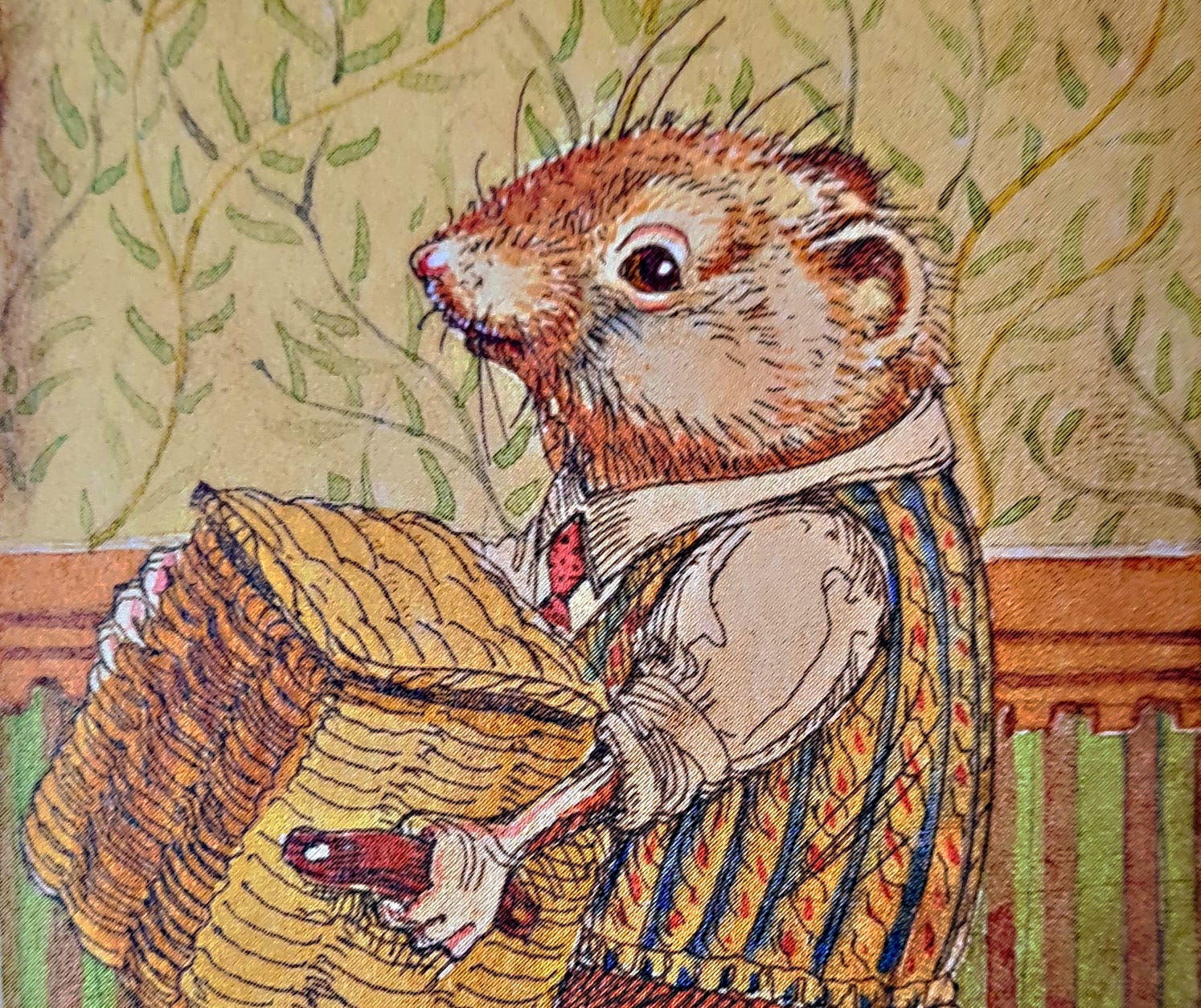
When I was a boy, the first thing I ever did on any beach was kick off my shoes, as I loved the feel of cool, moist sand between my toes (I hated it in my sandwiches though). I have written about those sandy toes before, along with the first castle I ever fell in love with in the Sussex town ofWorthing. You can read that essay here, in Why Adults Queue for Butterbeer.
A few miles west along the coast from Worthing, my grandmother, on my mother’s side, had a flat in the seaside town of Littlehampton, and I spent many of my boyhood summers in that town. Later, when I wanted to earn pocket money, I worked the weekends in a little ice cream shop on the front. Billy Smart had sited a permanent funfair, and there was also a boating lake, on which I sailed toy boats. But the thing I liked most about Littlehampton was the beach. I liked that beach, in fact I like all beaches, it was the sand. In sand a boy can dig and build stuff, which for me, was always the traditional sand castle, and the bigger and more elaborate the better. Many of my childhood summers were spent on the beach at Littlehampton, either building sandcastles or playing in the sand dunes on West Beach, where I tried and failed to dig a tunnel. The dunes were great to play in, but when it came to digging tunnels or building castles, the sand of those dunes was poor stuff.
Unlike moist, cool beach sand, dune sand was always hot and dry. I tried many times to dig a tunnel into those dunes, but it can’t be done. As soon as you start digging, the sides fall in and it collapses.
What is it with digging and tunnelling? Dogs aren’t the only ones who love it, small boys do too, and I was one of them.
Sixty years or so before my digging, there was another boy staying in Littlehampton. He was small, and born blind in one eye, and I wonder if he liked digging in the sand or if he tried tunnelling into those dunes as I did, especially as his nickname was Mouse.
Mouse was seven years old when he stayed in Littlehampton over the summer of 1907, around the same age I was when I was there. Along with his governess, he was on holiday. Over that summer he received a series of letters from his father. There were fifteen letters in all, and they were not the typical sort of letter you send a child on holiday. They did not ask whether he was being good, or whether he had made any sand castles or played in the sand dunes. Those letters were telling Mouse a story about what a certain Mr Toad had been up to.
Mr Toad steals a car but he is caught by the police, arrested and sent to prison. He then escapes prison disguised as a washerwoman. Meanwhile, his mansion is taken by a gang of weasels, but it is retaken by Badger, Ratty and Mole, who launch a surprise attack from a secret tunnel that comes up inside the hall. The letters ran on all summer, one adventure leading into the next.
Mouse’s governess, Naomi Stott, kept the letters, but we don’t know why. Perhaps she saw the potential for a great book, or perhaps she kept them in case Mouse wanted to hear Mr Toad’s adventures again, after all, he couldn’t see very well. We just don’t know, but it is fortunate she kept them. A seven-year-old boy doesn’t generally keep letters. He reads them, or has them read to him, and they end up under the bed, lost or thrown away, but the important thing is that Naomi Stott put them somewhere safe, as without them, Kenneth Grahame would never have written The Wind in the Willows. Those Littlehampton letters had been written to his son Alastair, whose nickname was Mouse, and those letters form the second half of the book.
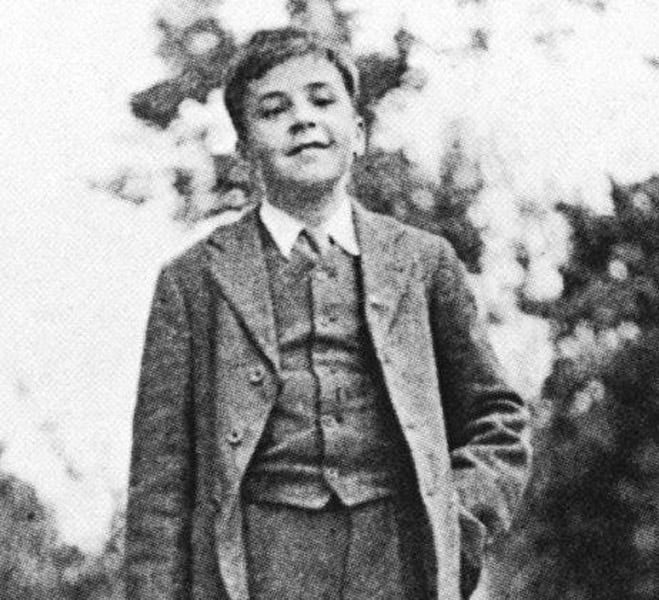
The following year, after Mouse’s summer holiday in Littlehampton, Constance Smedley, a visiting American journalist, was on a mission. She had been sent by the editor of Everybody’s Magazine to try and persuade Kenneth to produce some essays for publication. She became a family friend and one evening she overheard Kenneth telling Mouse a bedtime story about riverbank animals. She suggested that he might turn those stories into a book, but Kenneth said no, and the reason was simple. The man who wrote one of the most beloved children’s stories of all time hated writing, he couldn’t stand it. Also, Kenneth did not see himself as a professional writer. He was a gentleman amateur, one who had published some essays and two books of children’s stories because a friend at a rowing club suggested he did so. He was the Secretary of the Bank of England and had responsibilities. Writing was something he did reluctantly, and only to provide material for the bedtime stories he told his son Alastair – Mouse.
But thankfully Constance Smedley was not easily put off. She found out about the Littlehampton letters, and said something that no writer can resist: you don’t need to write it. You already have.
The bedtime stories about the riverbank that Kenneth was telling Mouse, became the first half of The Wind in the Willows. The Littlehampton letters became the second half.
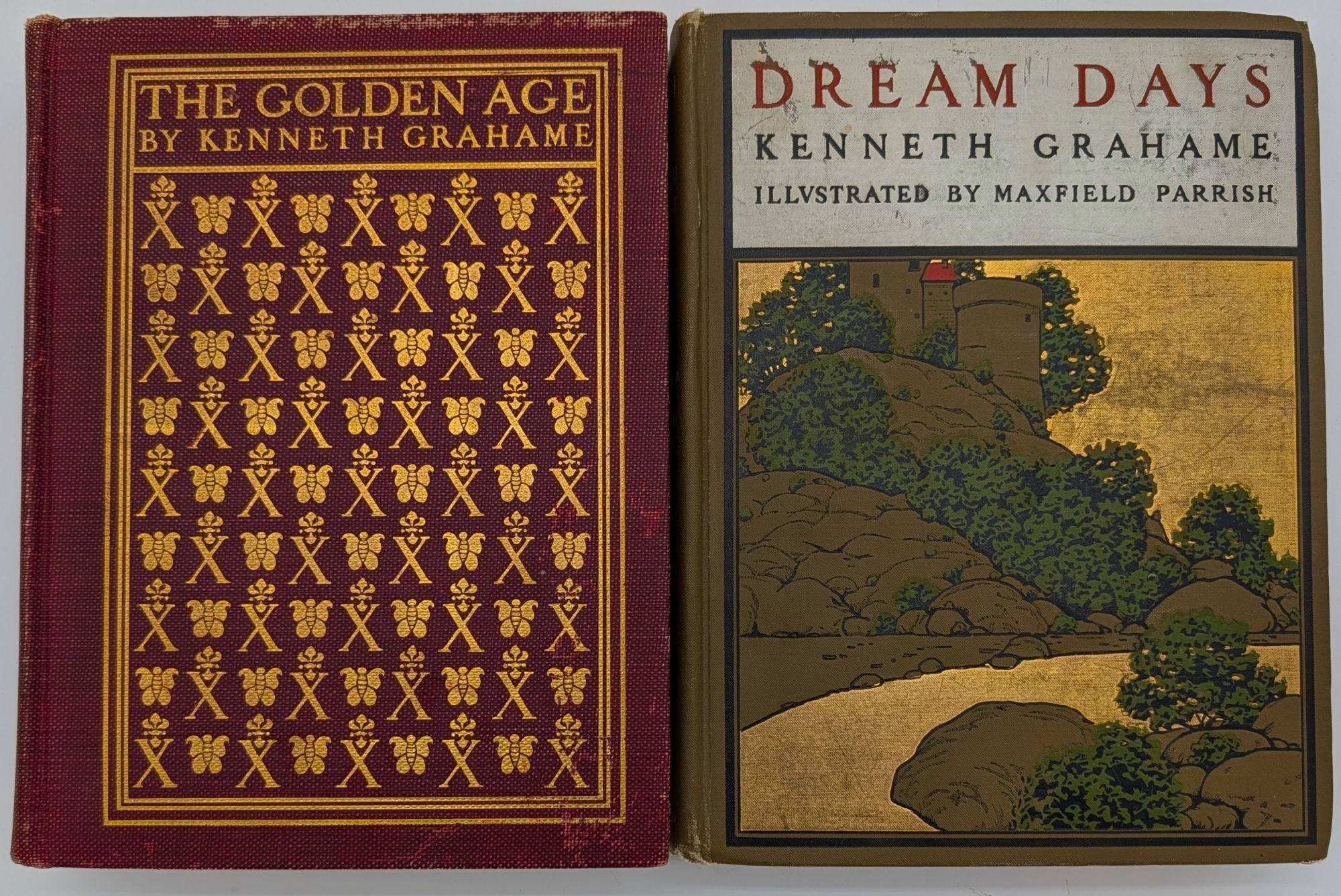
So, to publish. Kenneth Grahame already had an agent, Curtis Brown, who had placed and published Kenneth’s early children’s stories. Curtis tried to drum up interest in the The Wind in the Willows, but nobody wanted it. Publisher after publisher turned it down and Curtis even tried to interest magazines, but they said no as well. What the publishers wanted was a third volume to follow The Golden Age and Dream Days, the published books of children’s stories that made Kenneth Grahame’s name in the 1890s. Those stories were about children getting into scrapes and adventures, and they sold very well, particularly in America – which is probably why Constance Smedley was so insistent that those riverbank stories should be published. What arrived on the UK publishers’ desks was a book about a badger that lives in the roots of a tree and a toad who steals a car, along with a gang of thuggish weasels, not a story about children having adventures.
Eventually Curtis Brown persuaded Methuen Publishing, and they agreed to publish, but without paying an advance. They offered only a sliding royalty scale as they didn’t expect the book to sell.
The Wind in the Willows was published by Methuen on the eighth of October 1908, and very soon after the reviews arrived, and they were not favourable.
The Times Literary Supplement said that as a contribution to natural history the work was negligible.
That is an odd review about a children’s book in which a toad lives in a mansion, steals a car and then goes on to retake his ancestral home from a gang of criminal weasels. The review then went on to say that the natural history of the book was not up to standard, that the book was joyless, and that the reviewer had found the reading experience perplexing as they had no idea what it was about.
The Times Literary Supplement reviewer was not alone. Beatrix Potter objected to it as well, but thirty-four years later.
In a letter to an acquaintance, she said ‘It is a mistake to fly in the face of nature. A frog may wear goloshes; but I don’t hold with toads having beards or wigs!’
Seriously? The most successful writer of anthropomorphic animal stories in England, a woman who had spent her life persuading the public to accept a rabbit in a blue jacket, drew the line at a toad with a parting.
There was a broader complaint though, which is more understandable.
Who is The Wind in the Willows for?
The general consensus at the time was that it was too hard for children. The opening page gives a child ‘seclusion’ and ‘cellarage’. By the third chapter the child is meeting words like ‘copses’ and ‘imperious’. By the seventh, Kenneth is writing sentences a foot long with the verb buried somewhere in the middle.
But the vocabulary is the least of it. A child can skip a word they do not know and land safely on the next one. Children do this all the time, but what Kenneth builds is sentences that do not get any simpler when you remove the hard words, because the difficulty is not in the vocabulary, it is in the architecture. He puts conditions before actions, qualifications before statements, sub-clauses inside sub-clauses. The prose is pitched, by any modern measure, to at least a thirteen-year-old.
It is also too odd for adults. There is no spine with a fixed hero. Mole opens the book and then Toad takes it over and Mole waits offstage for most of the second half. Two chapters have nothing whatever to do with the plot. In one of them, a pagan god appears at dawn on a river island and the animals kneel down and worship it. In the other, Ratty is nearly talked into leaving the riverbank forever by a passing seafarer, and Mole has to hold him down physically and wait for the spell to pass. Neither chapter is explained and neither is resolved. They are simply there, and then the toad steals another car and the story carries on as if nothing has happened.
But every criticism is fair. Choose a protagonist, and get rid of the mystical chapters. Bring the vocabulary down, or push it up, and decide who your reader is. And yet The Wind in the Willows became a runaway success, so what did the reviewers and Beatrix Potter get so wrong?
In my view, those adults simply forgot what it is to read as they did when they were children themselves, which is really surprising in Beatrix Potter’s case, considering what she wrote. It is that simple. Maturity and the harsh realities of the adult world had imprisoned their imaginations. A child’s imagination has not yet been imprisoned, it is also hungry and ready to be fed. Anything and everything is still possible. A child can more easily be inside a book and simply enjoy it. Not so many years ago, most children could still open a book and be inside the story without any effort at all. Unfortunately in 2026, far too many children cannot. But I digress.
The Author.
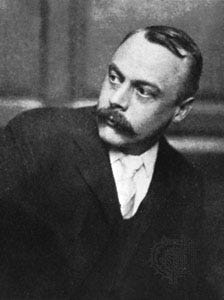
Kenneth Grahame was born in Edinburgh in 1859. When he was five years old his mother caught scarlet fever and died, and Kenneth caught it himself and very nearly went with her. And Kenneth’s father was a lawyer with a serious drinking problem and after his wife died, he could not manage the children – Kenneth had two brothers and a sister – and he sent them to be looked after by their grandmother in the Berkshire village of Cookham Dean on the River Thames.
When Kenneth was about eight, around 1867, his father made a brief attempt to bring the children back to live with him, but it lasted less than a year, and they all went back once again to live with their grandmother, whilst their father left for France. He stayed in France until he died.
So for Kenneth, there was only one constant in his life. The river. And this is of course where Ratty and the tales from the riverbank comes from, and Ratty says the line everybody knows, that there is nothing half so much worth doing as simply messing about in boats. It is the most quoted line in the book and it is usually treated as nothing more than charming. But it is more than that. Messing about in boats appears to be one of the few activities in Kenneth’s young life that gave him pleasure.
When he was nineteen, Kenneth decided that he wanted to go to Oxford, but his uncle said that university was a waste of money and put him into the Bank of England instead. Kenneth was very good at his job and was made Secretary of the Bank by the time he was thirty-nine, but he seems to have taken very little pleasure in it.
So, other than the Littlehampton letters and the bedtime stories for Mouse, how did The Wind in the Willows come into being?
In my view, it was for Kenneth, as it was for so many writers, formed in part by childhood losses that became unresolved psychological scars. He lost his mother, his father, his home, and finally, his chance at Oxford. But the man who created The Wind in the Willows was not destitute or broken. He was comfortable, accomplished, and by all accounts very pleasant company. I think that, by degrees, through the Littlehampton letters, through the bedtime stories for Mouse, through his two volumes The Golden Age and Dream Days, the stories of children getting into scrapes and adventures, and finally The Wind in the Willows, that Kenneth was reliving the childhood he partially had and still longed for, but also the safe, secure and permanent home he had never had as a child. It is a common pattern. Tolkien is the obvious example, with the loss of his mother, Sarehole, and his childhood love affair with the countryside.
For Kenneth, the riverbank in The Wind in the Willows is a place where nothing is ever taken away from anybody. The seasons are always at their best. Every animal has a home and every home is warm and every one of them is described with the attention of a man who has thought a great deal about what a home is. Mole’s is shabby and he is ashamed of it, but it is still one of the most loved homes in children’s literature.
There is a chapter called Dulce Domum in which Mole is out walking on a winter evening, catches the smell of his house on the air, calls out to Ratty, and Ratty does not hear him and keeps walking. Mole sits down in the road and sobs. In my view, that moment is Kenneth Grahame as a child, mourning the loss of his home, his mother, and his father
A child reading the story has no idea that the man who wrote that was five when his mother died and eight when his father left. The child reading it does not need to know. At some time or another, all children have called out to someone in distress, when someone is leaving and has not heard them. A child reads it and unconsciously empathises with Mole and feels his pain. We have all been there.
But it is not all gloom. The picnics are wonderful because Kenneth obviously loved them and had fond memories of them, but the the homes in the book are warm, snug and safe because the man creating them had once been a small boy with no sense of his own home.
That is why all great books are great, they have to be founded on real experience, and unfortunately too often on buried trauma.
Back to the boy called Mouse.
Mouse had been born prematurely in May 1900, blind in one eye and with a squint in the other, and everyone who loved him called him Mouse. Nobody has recorded who chose it or why, and I would guess it was only ever a description of how small he was.
I think Kenneth called his son Mouse because he was small, and then, when Alastair was four, Kenneth began telling him about small burrowing animals, and the one he gave Alastari to walk beside is a mole. Moles are proverbially blind. The most important thing that ever happens to Mole happens through his nose, on a dark road, when his eyes are no use to him at all.
Everyone agrees that in later life, Alastair is Toad, yet Toad was created when Alastair was still very young and receiving letters about his adventures whilst on holiday in Littlehampton.
As a young man, Alastair was a terrible, boastful show-off, but his appalling behaviour was forgiven every time. That much is well attested to, and Kenneth Grahame more or less admitted as much. Perhaps Alastair ended up with rather an unfortunate role model, from a holiday letter. Who knows.
He was certainly a loveable rogue, just like Toad. He was expelled from two prep schools and he only lasted six weeks at Rugby. At Eton he lasted a year. He did get into Christ Church, Oxford, but he failed his examinations three times. In May 1920, five days before his twentieth birthday, he was found dead on the railway line at Oxford. The inquest recorded accidental death, which was probably a kindness extended to his father rather than a finding, as Alastair’s death is was thought to be suicide.
After Alastair’s death, Kenneth Grahame never wrote anything of substance again.
It is a sad end to the story, but I think Alastair lives on in The Wind in the Willows, but not as Toad – as Mole.
Constance Smedley said that something happened at a house in Scotland. A dinner guest got up from the table, and stopped at a door that had been left slightly open, and stood there listening to Kenneth telling Alastair a story. What she heard was two voices, not one. Kenneth telling it, and Alastair asking for explanations, arguing points, and laughing. There was a badger in it, and a mole, and a toad, and a water rat.
Smedley was known for laying it on a bit thick, so take it as she told it, but the point stands. Those stories were not told just told to Mouse, he was in them.
I think the quieter, younger part of Alastair, the boy called Mouse, went into Mole. The small, young and innocent part that could not see and who probably dug sand castles on Littlehampton beach.
Ten years after Alastair’s death, Ernest Shepard went to Pangbourne on the River Thames, where Kenneth Grahame was living, to talk about illustrating a new edition of The Wind in the Willows. Grahame was seventy-one by then and largely a recluse, sitting in a chair in a cottage by the river, the place where he felt most at home.
He gave Shepard one instruction. ‘I love these little people, be kind to them.’ Notice. Ratty, Toad, Mole and Badger are referred to as people, not animals, and as people, they had children of their own, and one child in particular is very well known – Redwall.
Brian Jacques loved The Wind in the Willows. It was his childhood favourite, and I would love to have himheard him arguing with Beatrix Potter. A hundred years after Kenneth’s book was rejected, Puffin asked Brian Jacques to write the introduction to their centenary edition. He used it to say what he thought of the editors and agents who had turned the story down at the time. Brian had no patience with people so short of imagination that they could not picture a toad disguised as a washerwoman. He also said that The Wind in the Willows was an important inspiration behind his own Redwall series of books.
What stayed with me most was your observation about the homes in The Wind in the Willows: warm, safe, permanent places created by a man who had learned very young how easily a home could disappear. Perhaps imagination does this too: it does not rebuild what we lost exactly as it was, but gives it somewhere to continue existing.
And the thought that Mouse may live not only behind Toad, but also within the quieter, more vulnerable part of Mole, makes the whole story even more moving.
I’m reading this to my daughter right now and have been so refreshed by the detail and rich language that is used. Calling children up through reading to beautiful language rather down with the simple as possible words is a gift.
Loved your thought “A child’s imagination has not yet been imprisoned, it is also hungry and ready to be fed. Anything and everything is still possible. A child can more easily be inside a book and simply enjoy it.”
Yet another reason why I value children’s books so highly! The audience is the most ready for adventure.