

From King Arthur to Hogwarts
What every generation hungers for.


From King Arthur to Hogwarts - what every generation hungers for.
Written and read by Vincent Shaw
Around two years ago, a very elderly aunt told me that my grandmother had been given a gold sovereign by the Pre-Raphaelite artist, William Morris. I burst into tears on the spot.
The tears surprised me. I’m a man in his sixties, and I was weeping because of a coin that may, or may not have existed, given by a man who died more than a century ago. After a great deal of thought, I realised the tears weren’t about the sovereign – they were about connection. The full story can be found here.
I have spent my whole life admiring the work of William Morris and loving the work Edward Burne-Jones. The tapestries, the stained glass, the paintings and the medieval dreamworld they created, and I had absolutely no knowledge that my own family, in a very small way, had been part of it.
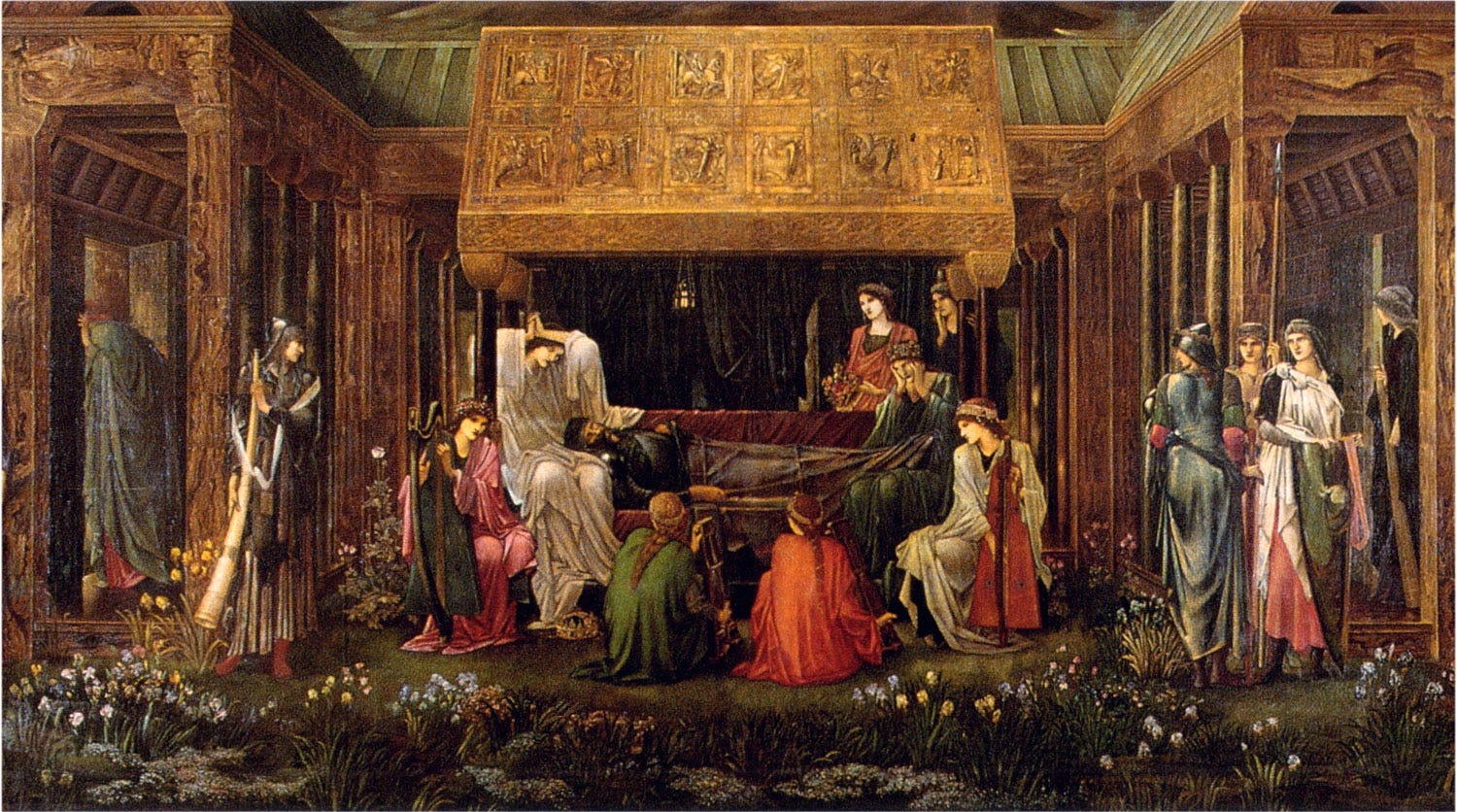
My great-great-grandfather Robert, knew William Morris well. He owned the Marylebone Glassworks in London, and made stained glass windows for Morris and Company. His sisters, my great-great-aunts, were cloth stainers who worked for Morris and lived above the very first Morris & Co shop at 449, Oxford Street.
After sixty years of ignorance, I could not believe that I had a direct connection with some of the men I admired the most. For me, it was total shock and an impossible dream come true, I was connected – hence the tears.
What I didn’t understand then, but think I understand now, is why I so desperately wanted to be connected to them. Morris, Burne-Jones and many other Pre-Raphaelite artists were reaching for something – they were reaching for the romance and beauty that can only be found, in fairy tales.
Without knowing it, that is what I had also been reaching for all my life, and now with greater insight, that is what I will continue to do until I no longer draw breath.
But I am not alone. That reaching, that searching has been going on for centuries.
In 1839, a young Scottish nobleman named Archibald Montgomerie, the 13th Earl of Eglinton, staged a medieval tournament on his estate in Ayrshire. Real armour. Real lances. Real horses. A hundred thousand spectators came to watch, many of them in costume. Unfortunately, the Scottish weather had other ideas, and it poured with rain for the entire tournament and the whole thing descended into a magnificent, glorious muddy shambles – knights and horses slipping in mud, pavilions collapsing, spectators drenched – but nobody seemed to mind. The desire, the longing to be part of the romance was bigger than the disaster and came to be known as the Eglinton Tournament.
Mark Girouard, in his wonderful book The Return to Camelot: Chivalry and the English Gentleman, traces this desire back to its roots. What he found was not nostalgia in the way we understand it – a sentimental longing for a lost golden age – but something deeper. A hunger, an ache. The Victorians were reaching for something their age was rapidly destroying. The very beauty and romance they believed in.
Victorian Britain was the richest, most powerful civilisation on earth – at the time – and it was spiritually eating itself alive. The Industrial Revolution had delivered extraordinary wealth, but it had done so by stripping out everything that made life feel meaningful.
The human hand was replaced by the factory line. Towns that had grown organically over centuries were demolished and rebuilt as engines of production. The air was black, the rivers were dead. Beauty was replaced by ugly efficiency. Romance was being replaced by the accounting ledger, which in turn meant that man had less value, than machine.
And in the middle of this, a group of artists and writers looked at what their age had built and found it spiritually and morally bankrupt. So they searched for those lost values by reaching into the past.
Morris looked for it in medieval craft – in the hand-printed book, the hand-woven tapestry, the hand-thrown pot. Burne-Jones (along with many other Pre-Raphaelite artists), looked for it in Arthurian legend, painting knights and enchanted forests with a luminosity that made the industrial world outside, the aberration, not the dream. Tennyson looked for it in verse, rewriting the Arthurian cycle for a generation that desperately wanted to believe that honour, beauty, and selflessness were still possible.
And they weren’t alone, and they weren’t the first. Others had gone before them. Sir Walter Scott and Kenelm Digby had already rekindled the flame – Scott through his novels of medieval chivalry, Digby through The Broad Stone of Honour, a hugely influential book that reimagined the knightly code as a living ethos for the modern gentleman. The desire to reach back did not begin with Morris and Burne-Jones. It had been building for decades.
Morris and Burne-Jones reached back to King Arthur and the medieval, not because the Middle Ages were better – Morris, of all people, knew they weren’t – but because the medieval world contained something their own age had thrown away. A belief that making things with your hands mattered. That beauty was not a luxury but a necessity. That the measure of a civilisation was not taken by what it produced, but by what it cared about.
And here is the thing that matters most. They didn’t just admire the past, they were inspired by it. Morris didn’t want to live in the Middle Ages. He wanted to make wallpaper, furniture, and stained glass with the same care and conviction that medieval craftsmen had brought to their work. Burne-Jones didn’t want to be a medieval knight. He wanted to step inside the myth – to paint Avalon so vividly that the world outside his studio, disappeared. The past was never the destination, it was the romantic inspiration.
My great-great-grandfather Robert was part of that movement. He made stained glass windows for Morris and Company, but not just churches, but for homes too, handmade whilst the factories of industrial England roared around him. The only surviving examples of his work are in a small parish church around the corner from my house in Sussex. I lived ten minutes away from them for a decade without knowing they existed. The full story can be found here.
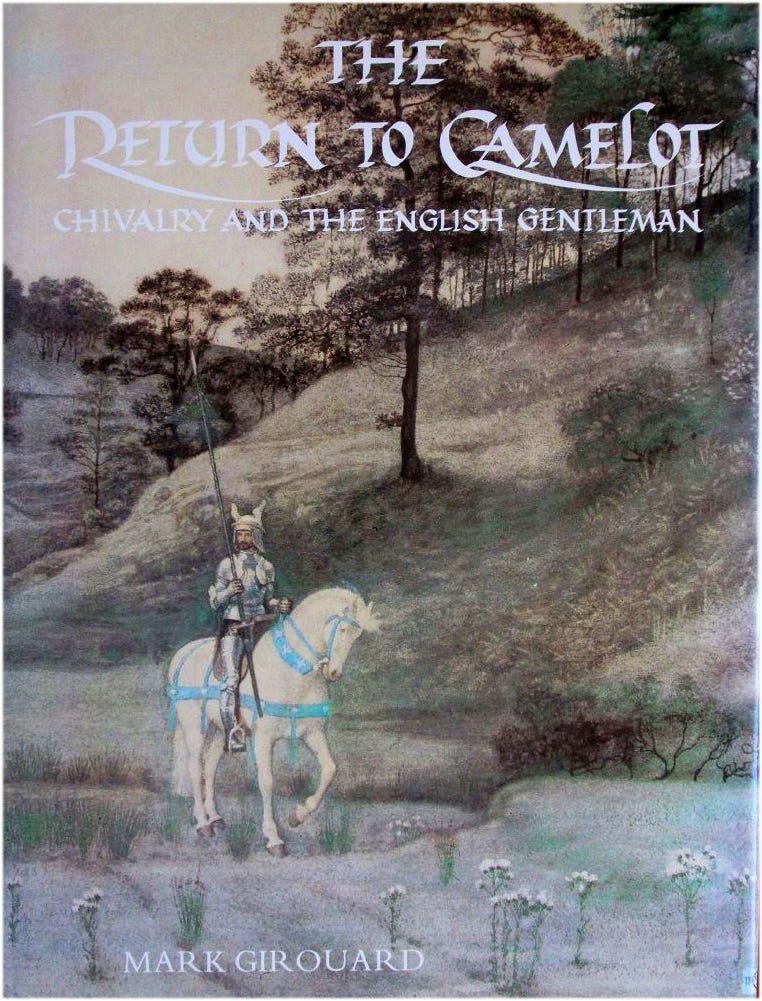
I own a copy of Girouard’s book. It came from and was published in the USA, and I have read it countless times. But one passage stopped my heart the first time I encountered it, and it has stayed with me for forty years.
On page ninety-five, Girouard describes Charles Lamb – not the essayist, but a young Victorian aristocrat preparing for the Eglinton Tournament. Earlier that summer, Lamb had rented a house outside Bognor Regis on the Sussex coast, for the races at nearby Goodwood, and one day had come across a fourteen-year-old girl wandering on the Bognor Sands. She was in deep distress. Her employer, an Indian rajah, was trying to seduce her. Lamb, in the full grip of the chivalric code he tried to live by, rescued her. Her name was Charlotte Gray, the daughter of a draper in nearby Chichester, and she was very beautiful, with coal-black hair that fell to her feet when she let it down. Charles became her faithful knight.
I have walked those sands. I still walk them. The book arrived from three thousand miles away and opened onto a scene on the beach I have been walking on, all my life.
The goose bump feeling I had on reading about Charles Lamb and Charlotte Gray, was the same feeling I had on discovering that my great-great-grandfather’s windows still existed around the corner from my home. The past is not behind us. It surrounds us, it’s beneath our feet and it’s in our bones. It is in the stories we tell our children and the things we make with our hands. It is the thread that connects a Victorian glassmaker in London to his great-great-grandson in Sussex. We are not separated from the past. We are made of it. It binds us to one another across generations, and when we feel that connection, often unconsciously, we sense we are part of something greater – a never-ending story. A story that started before we existed and that will continue, after we die.
The chivalric revival that Girouard examines in his book did not survive the First World War. It couldn’t. The generation that had been raised on King Arthur and honour, and the playing fields of Eton, walked into the trenches of the Somme and discovered that chivalry was no protection against industrialised killing. The medieval dream that had sustained a century of British self-belief, was destroyed.
What replaced it, was silence. A generation of men who had seen what they had seen and could not speak of it in the old language. Chivalry – honour, glory, sacrifice – had lost its meaning, destroyed by the reality of what those words had actually demanded.
But that deep ache, that hunger for something beyond the present, was not destroyed by the war. The hunger for romance, for beauty, for moral certainty, did not die. It lives in and thrives in the hearts of us all and it is impossible to destroy.
Two men who survived the First World War spent the rest of their lives reaching back into the past. Not this time for inspiration, but for ‘recovery.’ And they reached back further this time, back beyond the medieval and the romance of King Arthur. Further, deeper, to the roots beneath the roots.
One of them was J.R.R. Tolkien, a philologist, a scholar, and a man who fought in the terrible battle of the Somme. Before he was a novelist, he was one of the foremost scholars of Beowulf, the oldest epic poem in the English language. It is the tale of a hero who knows that despite defeating the monster, he will lose in the end. Tolkien understood that Beowulf was not a literary curiosity, but a living thing, that still had something to teach a world that had just tried to destroy itself.
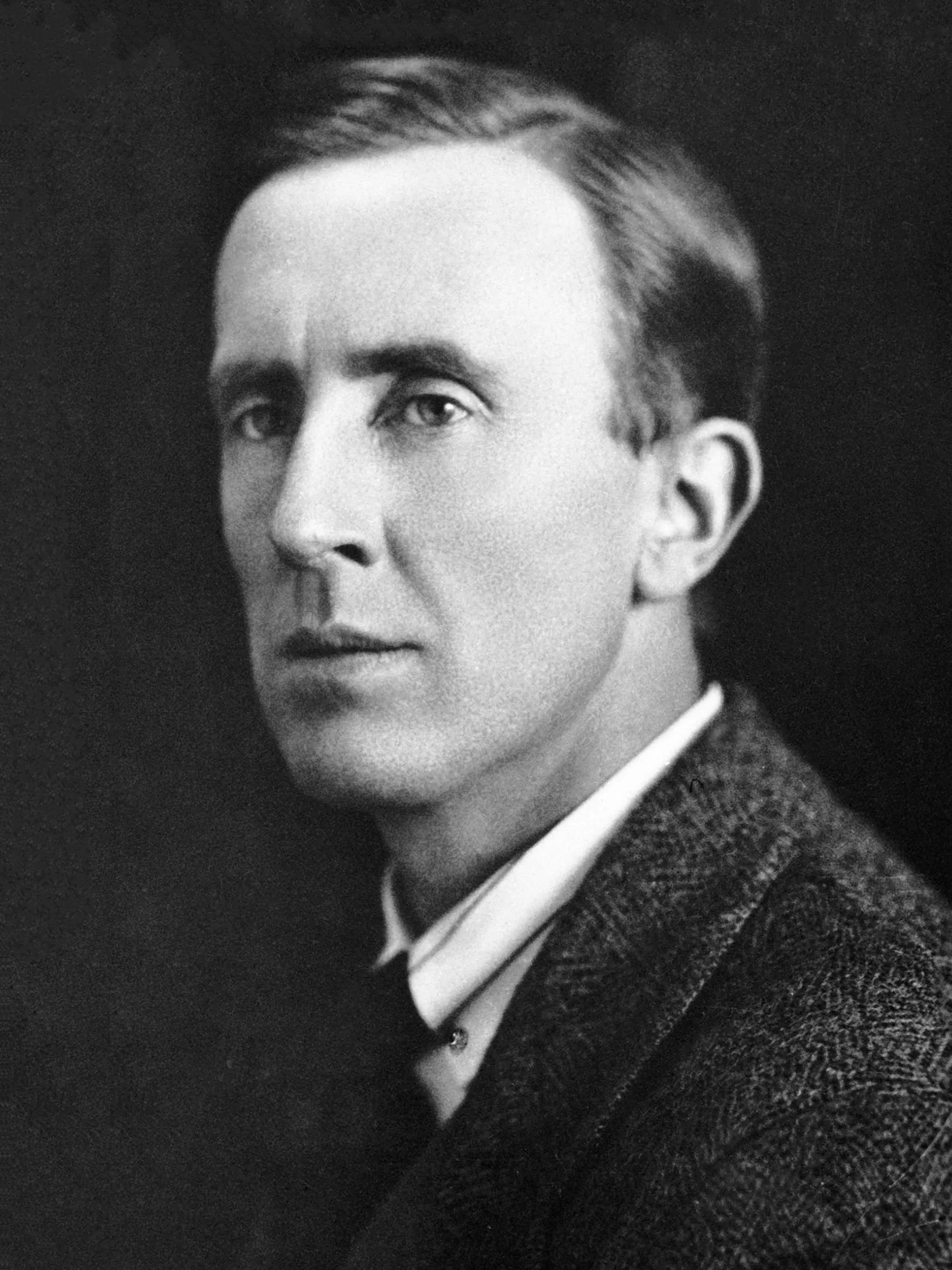
Tolkien reached back to Beowulf, to Norse saga, to the deep mythological roots of northern Europe, and he built Middle-earth. Not as escapism, but for what he called ‘recovery,’ a way of seeing things clearly again by seeing them through an older lens. Middle-earth is not a world of warriors. It is a world of creators and craftsmen – Elvish smiths who forge with patience and love, Dwarven miners who find beauty in stone, Hobbits who garden and cook and build with their hands – craftsmen who have to put down their tools to fight, and who long for nothing more than to pick those tools up again.
The other man was C.S. Lewis, Tolkien’s friend and fellow survivor of the war. He reached back to medieval romance, to classical mythology. He built Narnia – a place where children step through a wardrobe and find themselves in a world where virtue matters, and where good and evil are real and distinguishable. Lewis believed, and wrote explicitly, that the modern world’s rejection of objective beauty and moral truth, what he called ‘the abolition of man,’ was a catastrophe that would leave us with nothing to stand on. Narnia was his answer, his ‘recovery.’
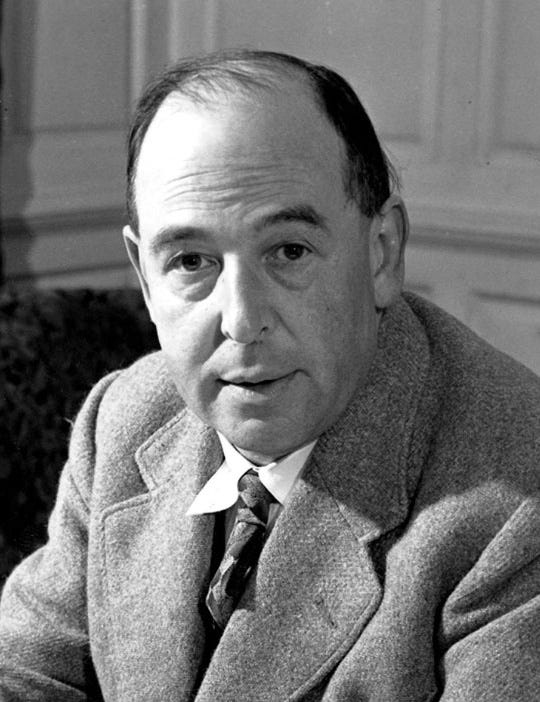
Both men were doing exactly what Morris and Burne-Jones had done a generation earlier. They looked at what their age had lost, and they went looking for it in older stories. The romance of the past was the raw material. Middle-earth and Narnia were the handmade result.
But between the Pre-Raphaelites and Tolkien, between the Victorian revival and the post-war recovery, something else happened. Something that changed the terms of the argument.
Modernism arrived as a reaction to the First World War.
It arrived with tremendous intellectual force and genuine moral conviction. The old forms – representational painting, narrative storytelling, ornamental architecture, tonal music – were declared exhausted, dishonest and complicit in the catastrophes of that terrible conflict. The argument was not trivial: if the old values had failed to prevent a world war, then perhaps the old values were part of the problem. Perhaps sentiment was a lie. Perhaps the most honest response to the war was abstraction and pure function.
And so beauty was stripped out of public life with frightening speed. Quite literally, ‘the baby was slung out with the bathwater.’ Buildings that had stood for centuries were demolished and replaced with towers of glass and concrete. The classical tradition in painting was abandoned. In literature, storytelling was dismissed as naive. Difficulty became a virtue. Accessibility became suspect. The gap between art and audience widened into a chasm that for many, was uncrossable.
In education, the same impulse took hold. Imagination was subordinated to measurable outcomes. The arts were pushed to the margins. Making things with your hands was regarded as recreation rather than learning. The assumption, never quite stated but always present, was that these things were pleasant but were fundamentally shallow and without merit.
The modernist project asked valuable questions. But the cost was enormous. When you strip beauty out of life, people do not stop yearning for it. They go looking for it somewhere else. And where do they find it?
In the old stories. In Tolkien, who was writing against modernism as much as against industrialisation. In Lewis, who named the crisis more directly than anyone else. Millions of readers reached for Middle-earth and Narnia, not because they wanted to escape the modern world but because the modern world had stopped offering them anything worth staying for.
And then came JK Rowling.

For Harry Potter, she also reached back, but not to Beowulf or Norse saga, but to the Edwardian boarding school story, the chosen-one myth, the medieval castle, and to the men she admired the most: Tolkien and Lewis. Men of the Edwardian age. She built Hogwarts: a place lit by candles, furnished with oak and governed by tradition and eccentricity. A place where children learn by doing – mixing potions, tending magical creatures and casting spells. Hogwarts could not be more different from the fluorescent-lit, outcomes-measured, assessment-driven schools she was working in.
Harry Potter arrived in 1997, at the dawn of the internet age, and it conquered the world. Not because it was the most original story ever told – JK Rowling borrowed freely from everything that came before her, and she did so unashamedly, because it fed a hunger that had been building for decades. I would argue that hunger was very much in herself as it was in the wider world. The hunger for a world where things were made by hand, where knowledge was passed from person to person, where belonging was earned through loyalty and courage.
The adults who queue for Butterbeer at the Wizarding World of Harry Potter (you can read more about that here), are doing exactly what the hundred thousand spectators at the Eglinton Tournament were doing in 1839. They were paying to stand in the presence of something they felt has been lost. The Victorian tournament was a shambles and Butterbeer is only a soft drink, but the desire, the yearning to be part of the romance is exactly the same.
Harry Potter is nearly thirty years old now. The children who read it under the covers by torchlight are now adults with children of their own. And they are handing their children the same books, reaching back to Hogwarts the way the Victorians reached back to King Arthur and Camelot. They do so because they feel that modern life, with all its digital convenience, has taken away something essential – romance.
The Victorians lost craft and beauty to the Industrial Revolution, and Morris and Burne-Jones reached back to King Arthur and the medieval world, and from that romantic inspiration, they made stained glass windows, paintings, and poetry, that many of us still treasure today.
Tolkien and Lewis tried to find themselves again after the trauma of the World Wars. They reached back to Beowulf, to Norse saga, to medieval romance, and from that inspiration they created Middle-earth and Narnia.
Modernism tried to strip beauty and narrative out of public life in the name of honesty and progress, but it simply created a hunger for things that are made with care and told with conviction, and that longing has simply grown stronger ever since.
The Harry Potter generation lost wonder and belonging to consumer culture and the start of the digital revolution. Rowling reached back to the boarding school, the castle, the candlelit hall for inspiration, and from that inspiration she made Hogwarts, a world so vivid and alive that millions of adults still queue to stand inside a replica of it, twenty-nine years after it was first imagined.
The names change. Camelot. Middle-earth. Narnia. Hogwarts. But the hunger, the yearning doesn’t. Every generation feels something essential slipping away and it always tends to be the same thing – beauty, craft, meaning, wonder and romance – and every generation produces storytellers who reach back to the older stories to recover it. I would argue that reaching into the past for inspiration is not nostalgic weakness, it is what we do when the present fails to nourish us with what our souls crave the most – hope.
And the lesson, every time, is the same. The storytellers who endure are the ones who look to the past and, inspired by what they find there, and make something new. Morris made windows. Tolkien made languages. Lewis made a wardrobe that opened onto another world. Rowling made a school where children learn magic.
The hunger has not stopped, and it will never go away.
Here in the UK, The National Literacy Trust tells us that only one in three children aged eight to eighteen now enjoy reading in their free time – the lowest level in twenty years. The screens are bright, the friction is zero and the slop is endless. But when you put a real story in front of a child they lean forward. I have watched it happen as I delivered that story. Two hundred children in a school hall, and the room went quiet, and they leaned forward, because the story was real and they were hungry for it.
The question is not whether the old stories still matter. Of course they do. King Arthur still matters. Middle-earth still matters. Narnia and Hogwarts still matter. They will continue to have value, for as long as human beings need to be reminded of what the present keeps trying to take away from them.
The question is whether we trust ourselves to make new ones.
New stories, made with care and told with conviction. Handed to a child by an adult who genuinely believes in them – not because they were designed to add revenue to a corporate balance sheet, not because the story carries an approved message, not because it has a film deal attached, but because the story is good, stands on its own merit, and is founded on courage and hope.
Care & Craft – ‘Why it’s more than nostalgia.’
This was such a good read. Thank you. I resonate deeply with it. I myself have been an aspiring author for some time now. When I started out, I wrote stories that were inspired by Enid Blyton, and filled with magical talking creatures. I wrote about women in their thirties who discovered they could see fairies. And then I went to a writing 'school' and suddenly all that mattered was ticking the right boxes, having 'the hook' and getting an agent. Then all the magic fell away, and my books were abandoned. Reading a post like this gives me hope and inspiration to write the stories that are inside me instead of trying to follow the rules. Thank you.
I can't tell you how this deeply resonated with me. Just yesterday, I was speaking to my mother about this - our connection to the past - how our ancestors and their lives are intrinsically part of us...and how it has been so important in my life to understand that and to contextualize me into the 'never ending story'. I have been doing research on my ancestors for quite some time now and that link to the past. I loved when you wrote "We are not separated from the past. We are made of it.....A story that started before we existed and that will continue, after we die." This piece was so beautiful and personal 🙏🩷